Images courtesy of Prime Video.

Images courtesy of Prime Video.
Season 2 of Fallout expands the scope of the post-apocalyptic world with new creatures, extensive virtual production, larger environments and a faithful recreation of New Vegas. One unique aspect of the production was shooting volume stage sequences on film. According to Jay Worth, Visual Effects Supervisor on Fallout – whose credits include Westworld and Altered Carbon – the process involved extensive testing because the team could not immediately evaluate the final image.
“If you are shooting on digital in a volume stage, you can go into your DIT tent, take a look at it and say, ‘Let’s up the luminance, bring up the saturation, fix the color balance, try brightening the wall and bringing down the key light. Alright, let’s shoot it again,’” Worth explains. “For us, we have to shoot five different bracketed versions of luminance, color saturation, key light and fill light, develop the film, take a look at it, go back in, make more adjustments, learn what we learned, guess to make sure it’s going to make the effect we want, refilm it and relook at it. The testing process is the crazy part. [Cinematographer] Bruce McCleery (Blue Beetle) did an amazing job doing those balances and understanding the technology and how film works with the technology. You’re trusting your technicians and artists to get it right, but you can’t see it until after you develop it.”
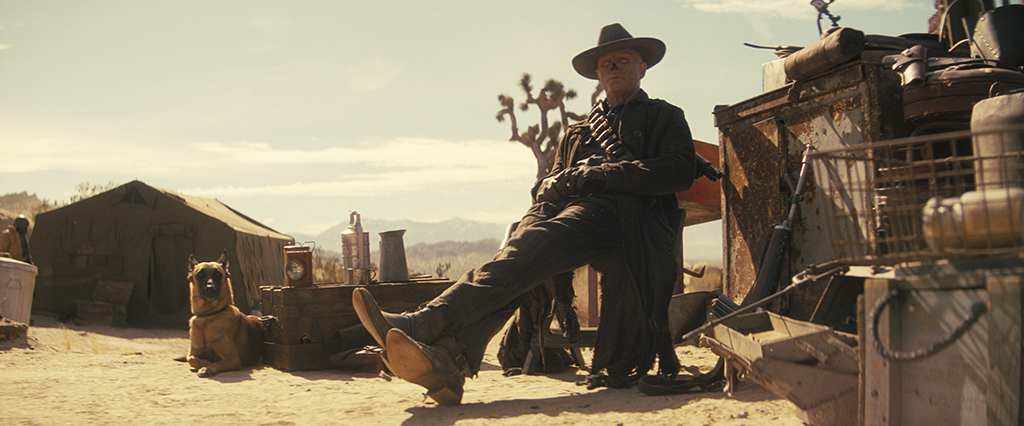
The extra testing was worthwhile because of the final look. “A digital asset then shot through film softens it in a way that makes it a lot more believable. You look at the asset on the wall, and you’re like, ‘I don’t know about that.’ Then you look at the film, and you’re like, ‘It looks great.’”
Virtual production was used for several sets in Season 2. “We redid the abandoned vault from Season 1 and asked, ‘What if we pop a hole in the ceiling and have sunlight blasting through?’” Worth remarks. The technology was also used for the New Vegas penthouse sequences and the Caswennan airship. “All of the waving flags and the drifting desert was done on the volume,” he notes. “We did all the flying up on the deck of the Caswennan when the Brotherhood is drifting in, when Max comes back in Episode 202 and docks up there. We also did the flying work for Max and Xander as well for when Max is by himself.”
“The fun thing about the Radroaches is that they’re like dumb bumblebees. You’ve got them flying and dying as they hit a post and kill themselves. It’s fun to see how you can choreograph all those different pieces and feel like this weird, dumb swarm of danger coming at our poor Vault Dwellers.”
–Jay Worth, Visual Effects Supervisor, Fallout Season 2
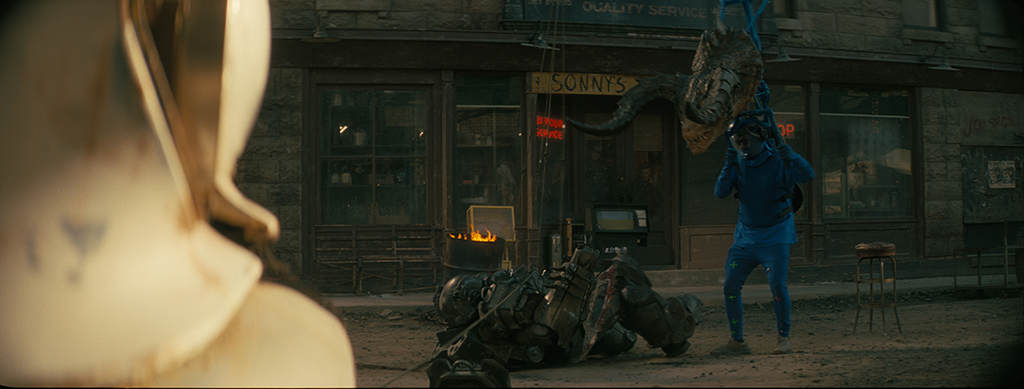
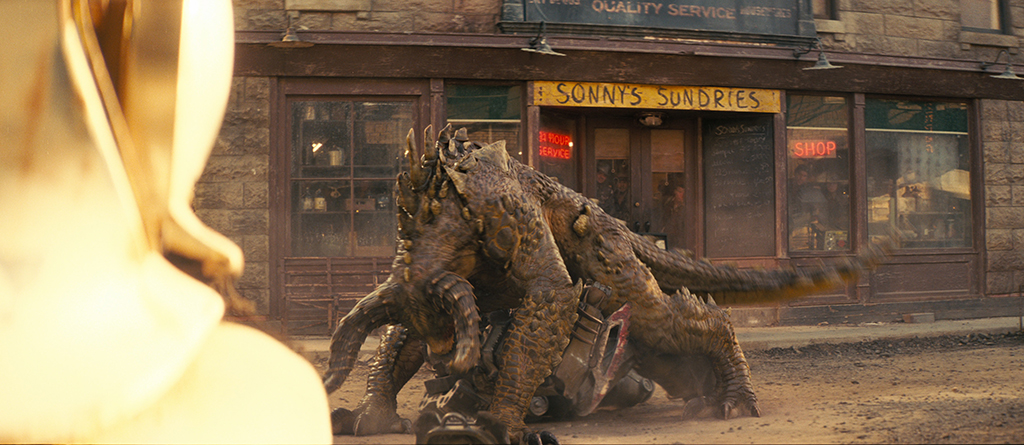
The Deathclaw intro sequence was tricky, and it was born from one question: “What if we try to do outside at night in a snowstorm with fire as our primary lighting element when we introduce the Deathclaw for the first time?” Worth recalls. “That was all done on the volume. We never like to do things simply on our show!”
Particular beats from the video game were matched frame for frame regarding the Deathclaw. “We don’t do previs per se, but we do stuntvis and storyboards,” Worth notes. Episodes 204 and 205 are straightforward. “The Deathclaw comes and reveals itself on the Strip, has a couple of roars, swipes a palm tree, and the Ghoul and Lucy run out of there. But Episodes 207 and 208 are a battle the whole time, so it was figuring out how to choreograph that.”
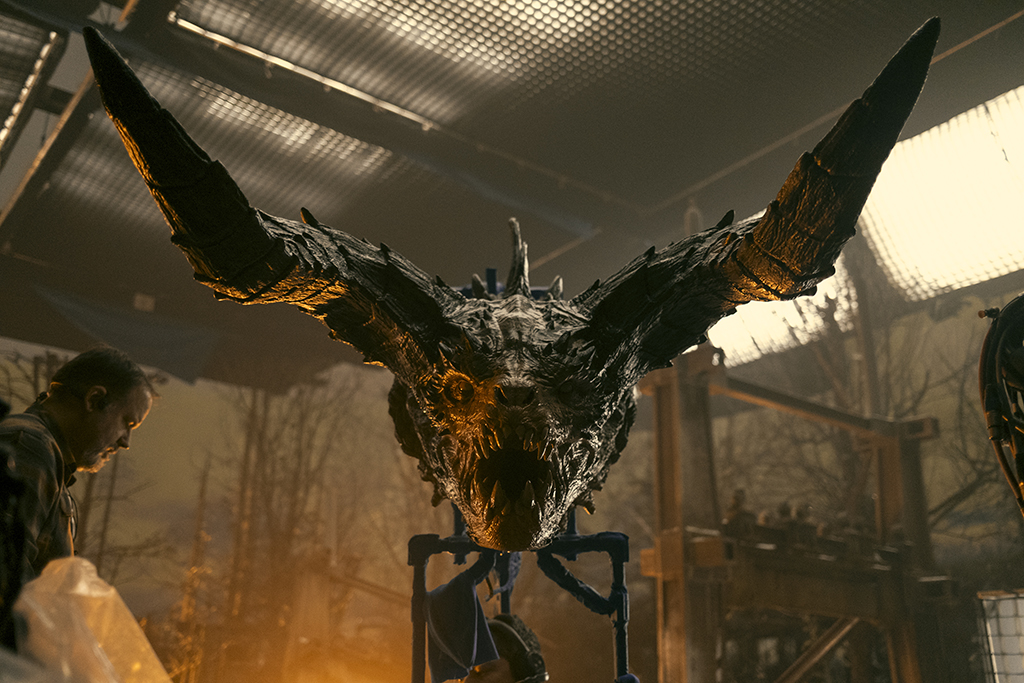
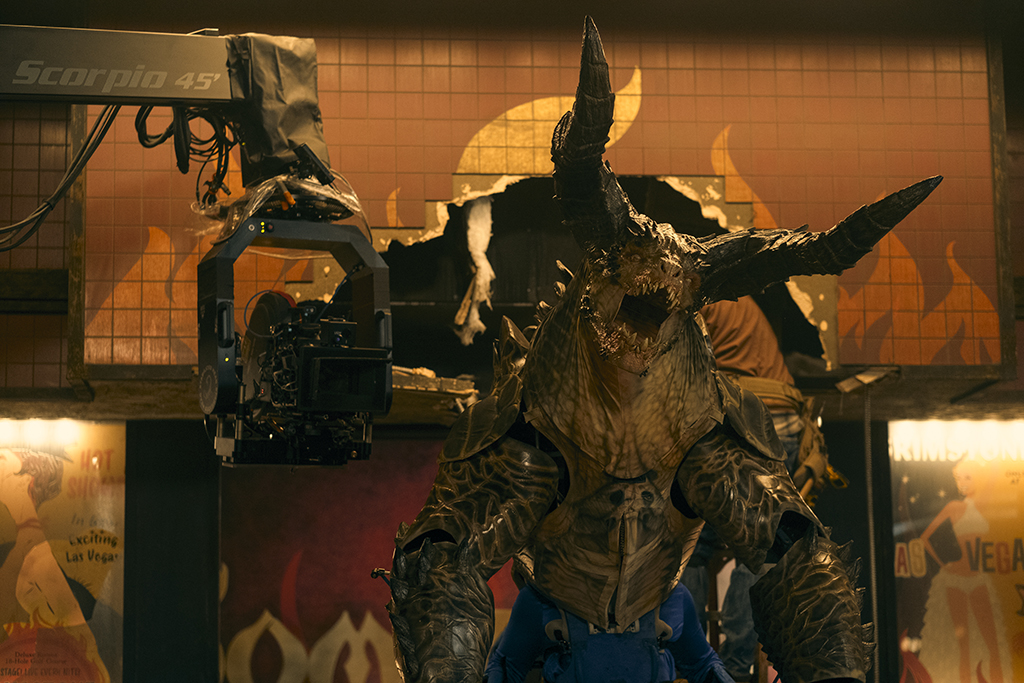
Digital augmentation was unavoidable. “We ended up adding the shoulders and claws, but those were great shots [to begin with]. Where it’s breathing, the nostrils and eye blinks, we did some tweaks for timing and continuity, but that was all the team at Legacy Effects building that incredible puppet. The team at ILM scanned that and built the rest of our creature. Everything in Episodes 207 and 208 is CG. But having that grounding for what our creature should be for that introduction kicked off the Deathclaw in a way that is organic and tactile, which we love: ‘Is it a puppet? Is it real?’ Every time Max and the Deathclaw battle, he runs into a real object, and we used those takes as necessary.”
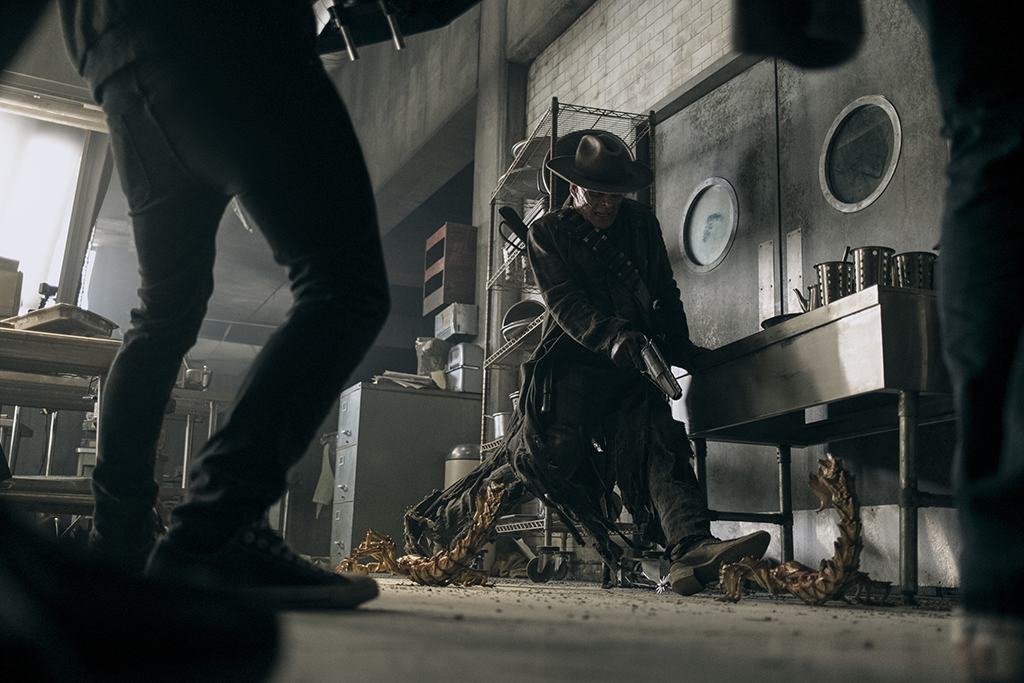
Nuclear radiation has caused scorpions to mutate into the aptly named Radscorpions. “The team at Quantum VFX did this huge Radscorpion puppet, and it was on a push dolly cart,” Worth notes with a laugh. “It was moving around the set and running into the table and coming after Walton Goggins. Half of the takes are Walton with nothing. The other half of the takes have this weird half-head on him. The baby Radscorpions were fun. We had those on sticks and different wires, and half the time the team at ILP in Sweden didn’t touch them. We just did stick removal, and it’s this puppet going across the ground. The beat where it jumps out of the pot and lands on Walton’s face – oh my goodness! That was hilarious because it’s two in the morning and Fred Toye [director] had this idea of it jumping out of this pot. The Ghoul turns, and this baby Radscorpion flies out. It lands on him; he gets it off and shoots it. That’s just us with a monofilament pulling that thing a bunch of times. There are all of these takes of it flopping, hitting him on the side of the head and landing pathetically. Then the last take: you’re running out of time and don’t know if you’ll be able to get it. You might have to shoot it clean, but everybody nailed it. All we did was a wire removal. It was amazing.”
The Radroaches return in Season 2, once again terrorizing the Vault Dwellers and leaving plenty of blood and gore in their wake. “That was special effects makeup doing all the neck stuff [on the Vault Dweller]. We did some clean-up on the neck flap. For a couple of beats, we had the puppet hit people so it’s motivated and gives the camera something to focus on. The scene where the Radroach comes after the guy and knocks him down was done with our puppet running into him. The same thing when Norm knocks the puppet off. We at least had something there for him to hit. I said to the team at Refuge VFX, ‘Here are the main beats. One comes up; one bites her. They all freak out. They run into the room, and one gets in, and then everybody dies. Have fun.’ Fred Ruff at Refuge VFX said, ‘This is the best.’ And they’re coming up with all these different actions. The fun thing about the Radroaches is that they’re like dumb bumblebees. You’ve got them flying and dying as they hit a post and kill themselves. It’s fun to see how you can choreograph all those different pieces and feel like this weird, dumb swarm of danger coming at our poor Vault Dwellers.”
“For us, we have to shoot five different bracketed versions of luminance, color saturation, key light and fill light, develop the film, take a look at it, go back in, make more adjustments, learn what we learned, guess to make sure it’s going to make the effect we want, refilm it, and relook at it. The testing process is the crazy part. [Cinematographer] Bruce McCleery did an amazing job doing those balances and understanding the technology and how film works with the technology.”
–Jay Worth, Visual Effects Supervisor, Fallout Season 2
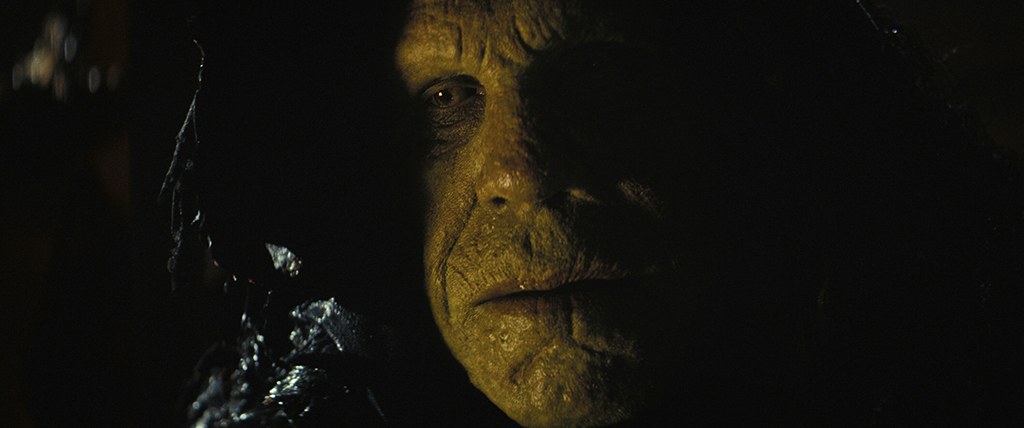
Dealing with the Super Mutant was a new twist. “That was a real privilege to get to work with Ron Perlman,” Worth notes. “He is such a legend from the game, going all the way back to the beginning. Now he’s a Super Mutant. For that one, we did facial capture, but it didn’t quite work as we had hoped, so the team at ILP did a full CG replacement for that whole reveal. It’s all them. We built our Super Mutant more based on the game than on Ron per se, but it has flavors of both, which is fun. It’s a combination of Ron and Marcus from the game.”
Carey Jones, the Prosthetic Makeup Designer, served as the stunt performer for the character. “Carey is six foot eight and a large guy; he had this hood on and did all the movements for all the acting in the sequence before the big reveal. For the reveal, we ended up using the take with this mask, so we had a practical hood. But then we took Ron’s performance from on the day and animated to match to his performance, with a full CG replacement for the head and face.”
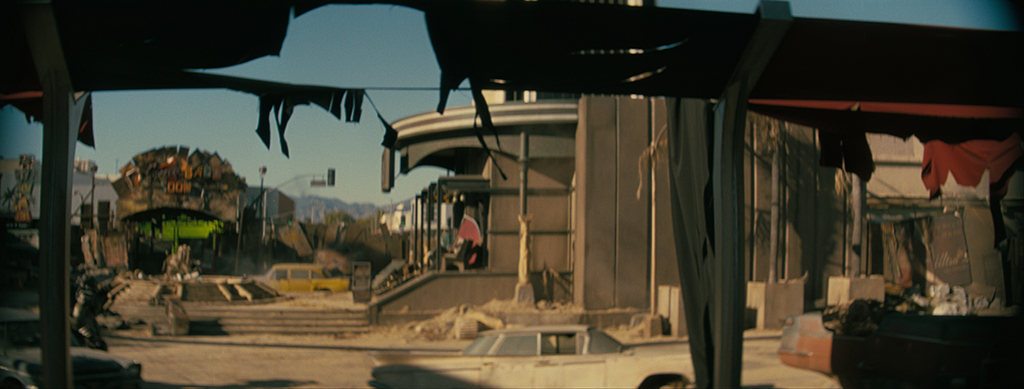
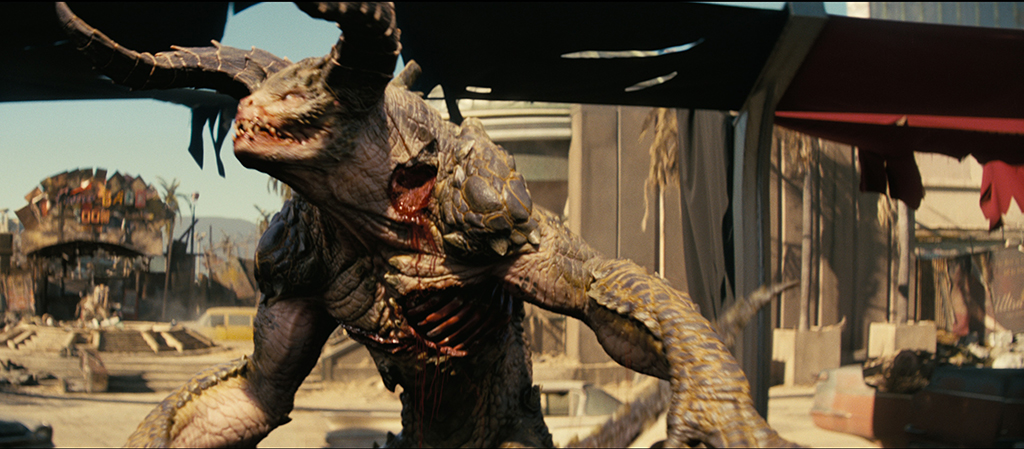
A fun sequence takes place at the Dino Dee-lite Motel. “Howard Cummings, our amazing Production Designer, and Mandi Dillin, our Location Manager, found the actual motel that set was based on for the game, and that’s where we got to shoot that sequence,” Worth reveals. “It was really cool!”
A practical explosion was done for the car. “We were sitting there in post after the fact, and Graham Wagner and Geneva Robertson-Dworet [Creators, Executive Producers, Showrunners] were like, ‘When cars blow up in Fallout, they have these mini-nukes. We should try to do that.’ We were like, ‘That’s so cool.’ The team at Refuge VFX pulled that off in creating this incredible mini-nuke explosion for our car, and it ended up being a signature thing we did a couple times throughout the season. Anytime a car would blow up, it was like, ‘Let’s do the nuke again!’”
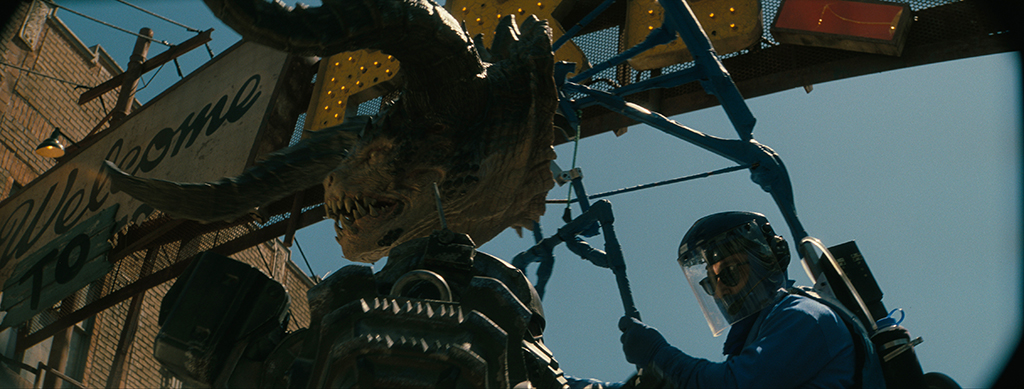
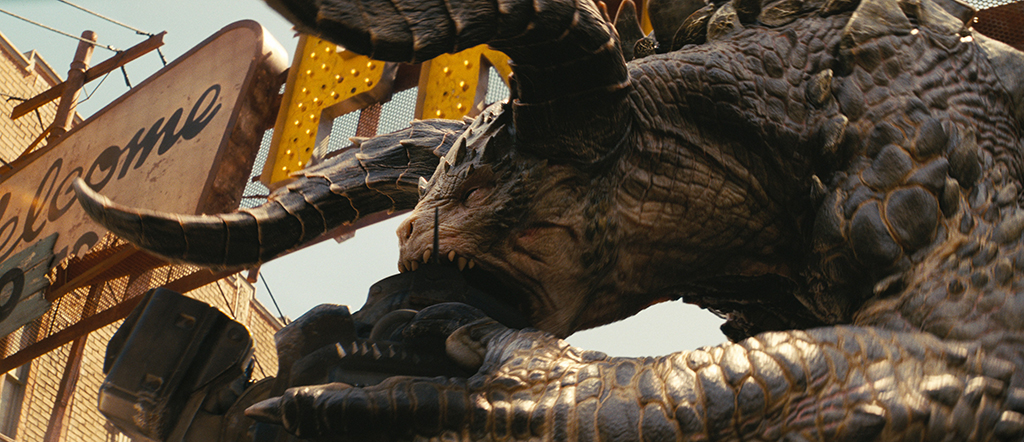
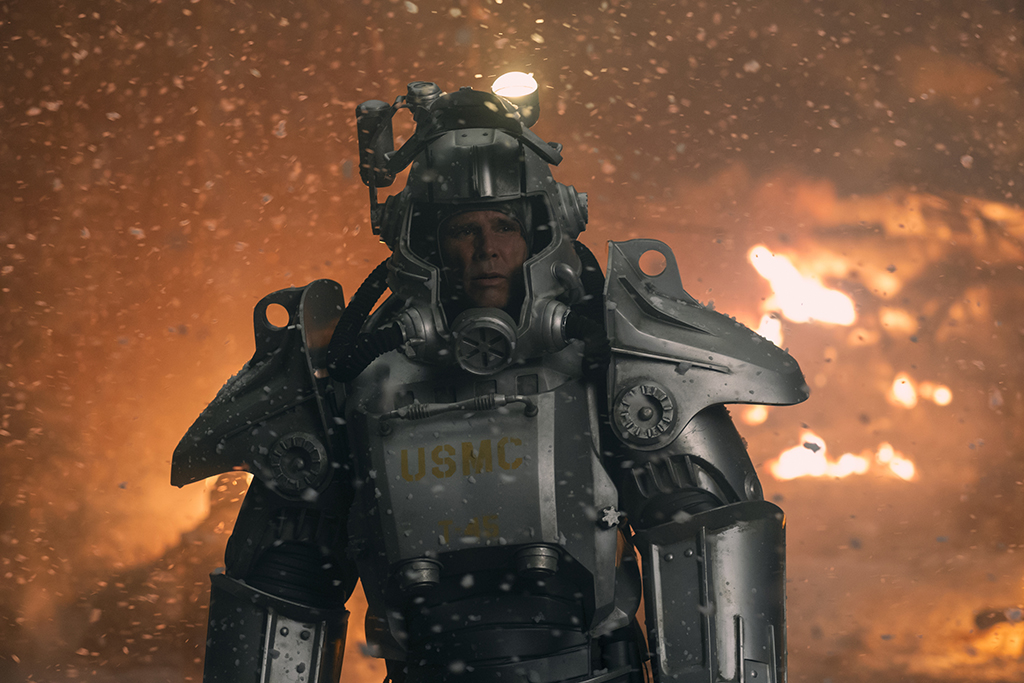
In a different scene, a nuclear explosion is reflected in an eye. “The team at RISE had developed that look for us from Season 1. It was about figuring out how to do that again. For me, one of the more powerful moments in the season was when Hank unfortunately dropped the nuke on Shady Sands in Episode 202.”
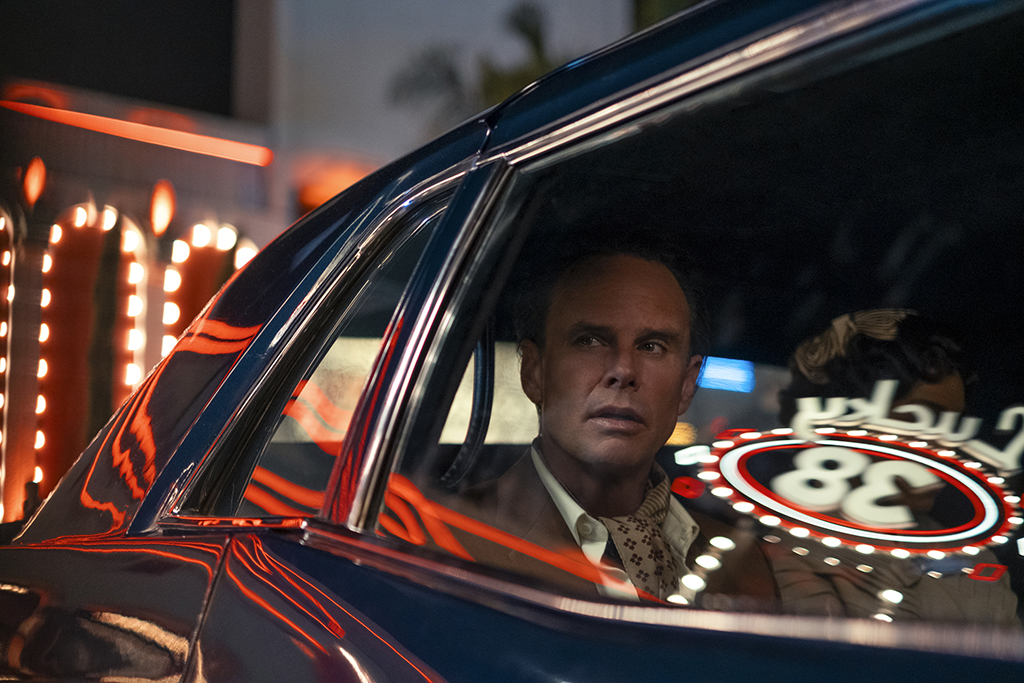
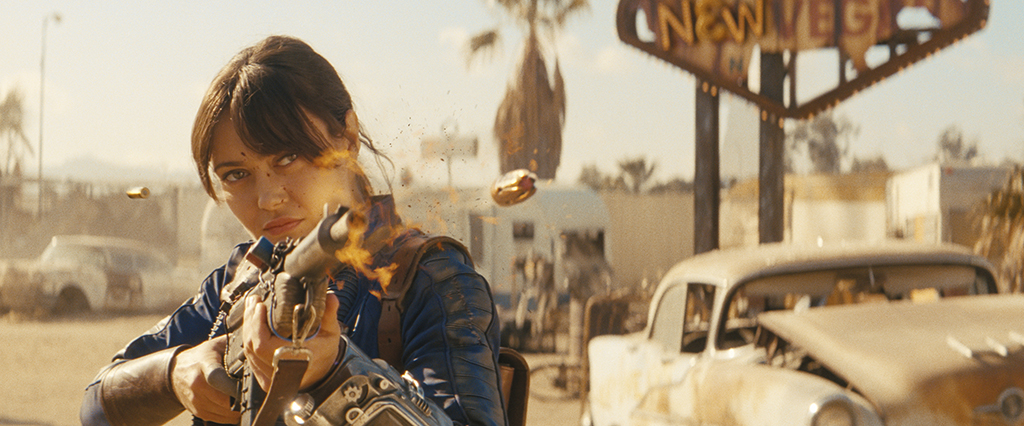
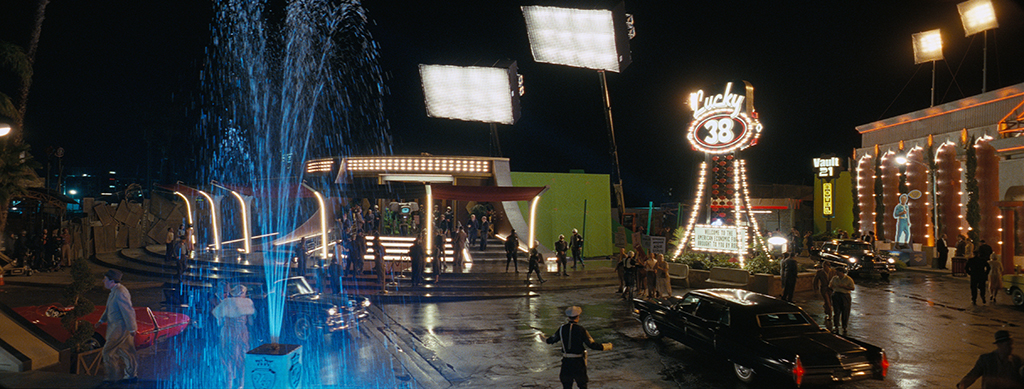
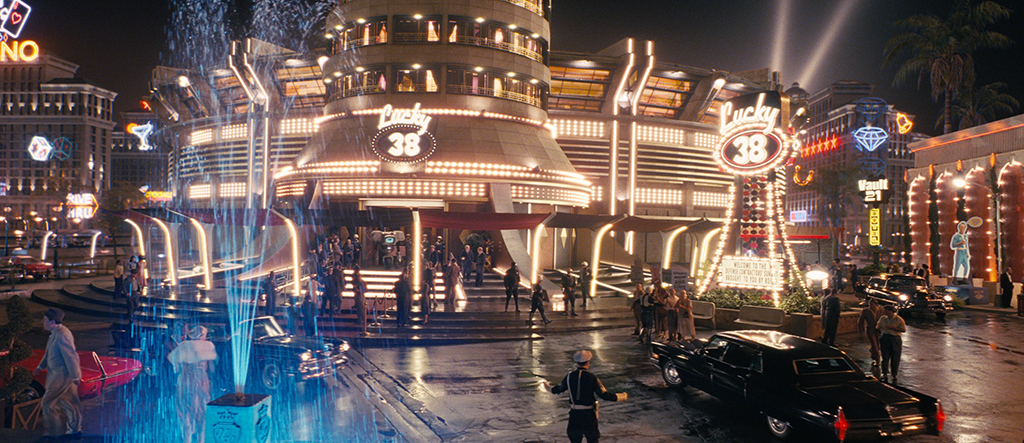
New Vegas is a prominent environment in Season 2. “In the game, you go through the Southern Gate, come through The Strip and go into Freeside, but you can’t build a set that big. Howard and Mandi found an abandoned mall up in North Hollywood, and we built the Southern Gate on one part of it. We also constructed the façade of Tops and Gomorrah and a part of the base of The Lucky 38.
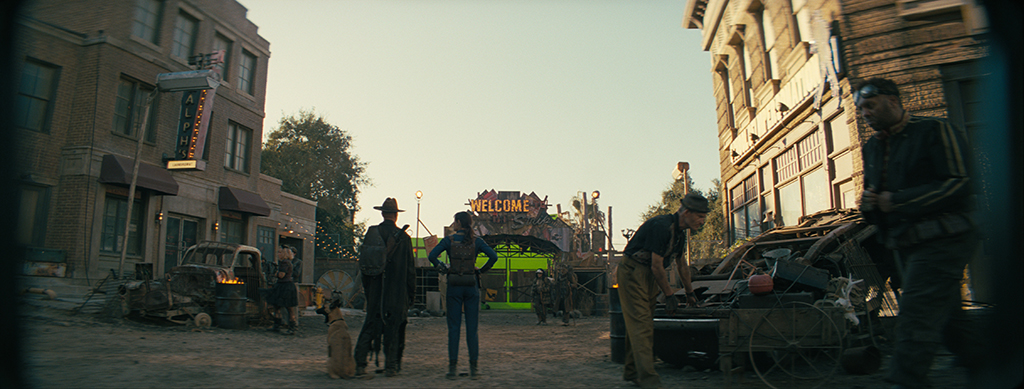
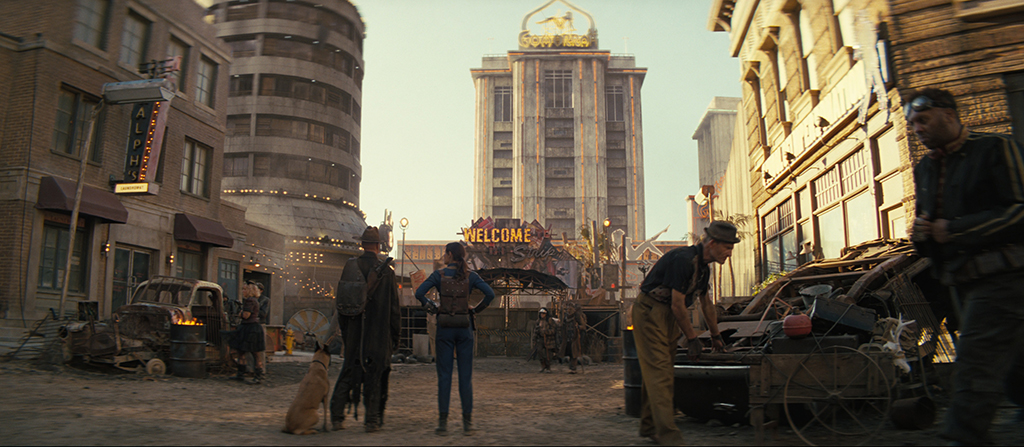
Everything was extended for Freeside. “What was also fun is we were looking at the elements of Freeside, and Howard was like, ‘This looks like Melody Ranch.’ We were able to rebuild all Freeside on Melody Ranch, which is where we filmed Westworld.” Raynault VFX was responsible for the digital set extensions. “They built out the asset for that big reveal when Lucy and the Ghoul are walking into New Vegas for the first time.” The lighting was all over the map. “You have sunny days, cloudy days, and we had days where we had to replace the whole sky because it wasn’t quite bright enough. We had a weird one where we were hoping to get a lot of that direct sunlight, but there were a ton of overcast days. Sometimes we got stuck with less.”
The New California Republic encampment only required clean-up, but it was a different story for Caesar’s Legion. “They built a huge portion of these tents but still couldn’t quite build enough,” Worth explains. “We were out there and had to populate most of those with digital doubles and full set extensions for tents to create that massive set. We had some weather issues. One time, wind came in and knocked everything down. We arrived the next day and couldn’t set it all up in time. We had to do some pickups at different locations and try to make it look like it was in the same place.”
In Season 2, Area 51 gets uncovered. “That was a sequence where we’re out in Dumont Dunes for the big reveal, and we’re placing it within these dunes,” Worth explains. “Everything in the hangar was shot at Ontario Airport. They happened to have these huge dirt mounds randomly outside of this hangar. We left those practical and did all the set extension out the doors. Everything on the grounds for the stuff in the barracks was shot in an abandoned prison, and we had to add dirigibles and sand dunes around that and do clean-up.”
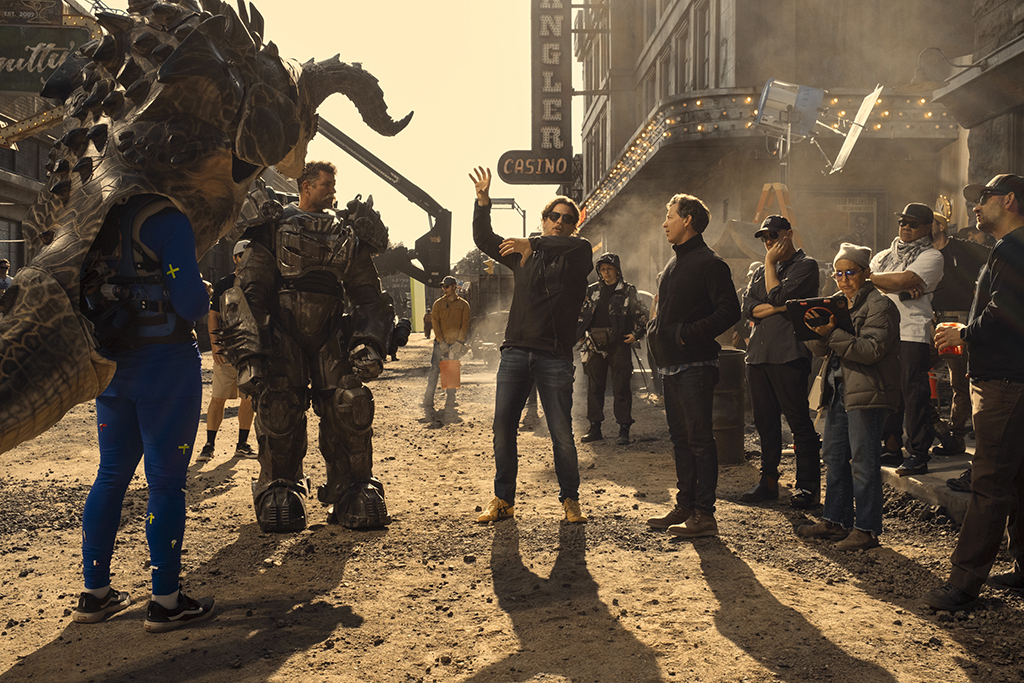
Just over 3,202 visual effects shots were delivered across eight episodes by ILM, RISE, Important Looking Pirates, Raynault VFX, CoSA FX, FutureWorks, Haymaker VFX and Curated. “The schedule was more challenging this year. We had less time than in the past, but it helped us hone in on more specifics of what we were going to be doing. Season 2 was in some ways less challenging than Season 1 because the latter was a blank slate. We had to do Snip Snip, environment work, and figure out how we were going to do the Vertibird battle and Cyclops. Season 2 was, ‘We know what the Deathclaw, Radscorpion and New Vegas look like.’ It was a little more contained, even though the technological challenges of doing more creatures, volume work and different environments were challenging.”