Images courtesy of Prime Video.

Images courtesy of Prime Video.
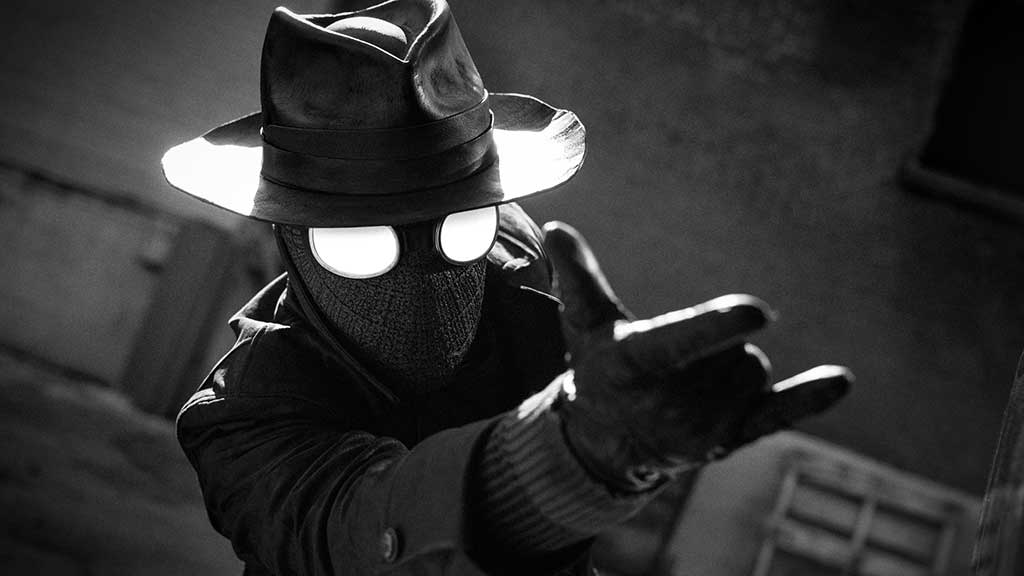
Nicolas Cage finally gets an opportunity to portray his Spider-Man: Into the Spider-Verse character in live action with the Prime Video series Spider-Noir. Created by Oren Uziel and produced by Phil Lord and Christopher Miller, the series follows middle-aged private investigator Ben Reilly as he discovers he is not the only one with superpowers in 1930s New York City. Released in both black and white and color, Spider-Noir features 3,250 visual effects shots across its eight episodes.
Visual Effects Supervisor Hnedel Maximore (Hunters) and Visual Effects Producer Brooke Noska (The Orville) oversaw the effort, with support from Alchemy 24, Barnstorm VFX, Cinesite, CoSA VFX, ILM, Ingenuity Studios, BOT VFX and Version Zero. An early advantage was that all eight scripts were completed before production began, allowing the team to identify the most VFX-intensive episodes and allocate resources accordingly. “From day one, we knew what we were doing, where we were headed, what were going to be the high points we had to focus on, and these are the ‘bottle episodes,’” Noska states. “I worked closely with our line producer, Pavlina Hatoupis, to make sure that the visual effects spider bucks were there. If we were heading in the direction of running out of spider bucks, we would [discuss] and correct the course, but never at the risk of not telling the story we needed to tell.”
Nicolas Cage’s casting shaped the project from the outset. “Not to be cliché, but with great power comes great responsibility,” Nosak laughs. “There’s no bigger powerhouse than Nicolas Cage. You got to step up to the occasion. It [influenced] how we thought of building the characters. He’s one of the few organic web shooters. How does that become a part of Ben Reilly? But also, how does it represent Nicolas Cage? He’s such a powerhouse. We wanted to make sure that it felt organic to him and his story.”
The Emmy-nominated series also took a different approach to portraying its web-slinging superhero. “I was helping my daughter tie her shoe the other day, bent over too fast and pulled a muscle in my back,” Maximore shares. “I remember my first interview with the showrunner, Oren Uziel. He was like, ‘I’m sore all the time. Yes, I want to see a superhero show and tell a superhero story, but I’m tired of these guys who are unbreakable. Superheroes are people. We hurt. I want to tell a story of a guy who doesn’t want to do this.’ We all, as much as possible, tried to relate to that. From a VFX standpoint, that became our approach to Ben Reilly and Spider-Noir. Oren told us, ‘If it looks like Tom Holland or anything Peter Parker would do, or any highly agile move, we need to stiffen him up. He’s still doing extraordinary things, but then he’s going home and taking a handful of Advil because of being in so much pain.’”
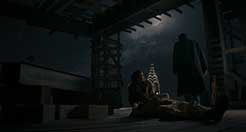
“We retained as much of Nic’s performance as possible. We had to introduce a couple of full visual effects shots, each with its own set of complications. For a number of reasons, we could not scan Nic, so making a full digital double in those sequences was a logistical challenge. We overcame it in the style and tone of the end result. How we introduce these apparitions and how Ben has to confront his past decisions was hard to do but rewarding.”
—Hnedel Maximore, Visual Effects Supervisor, Spider-Noir
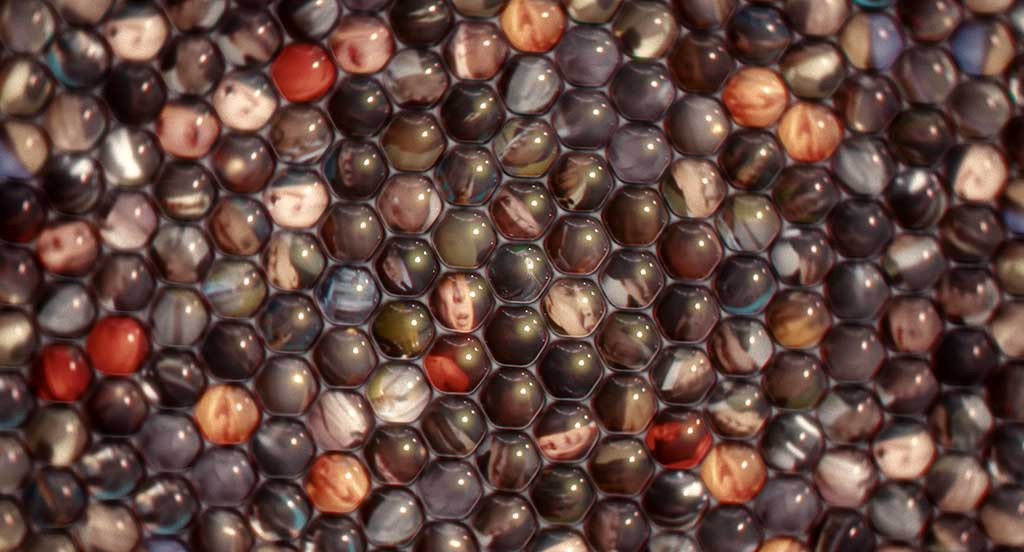
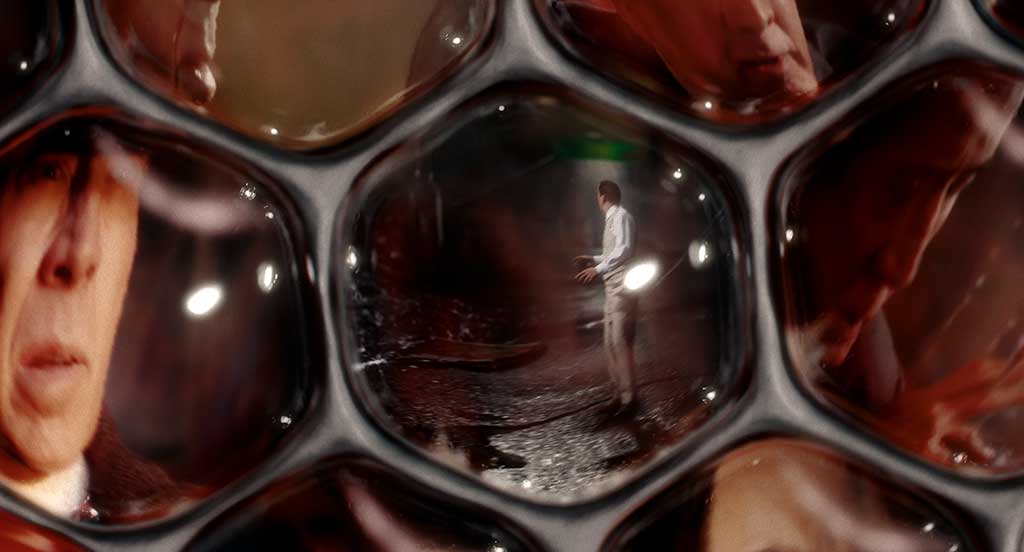
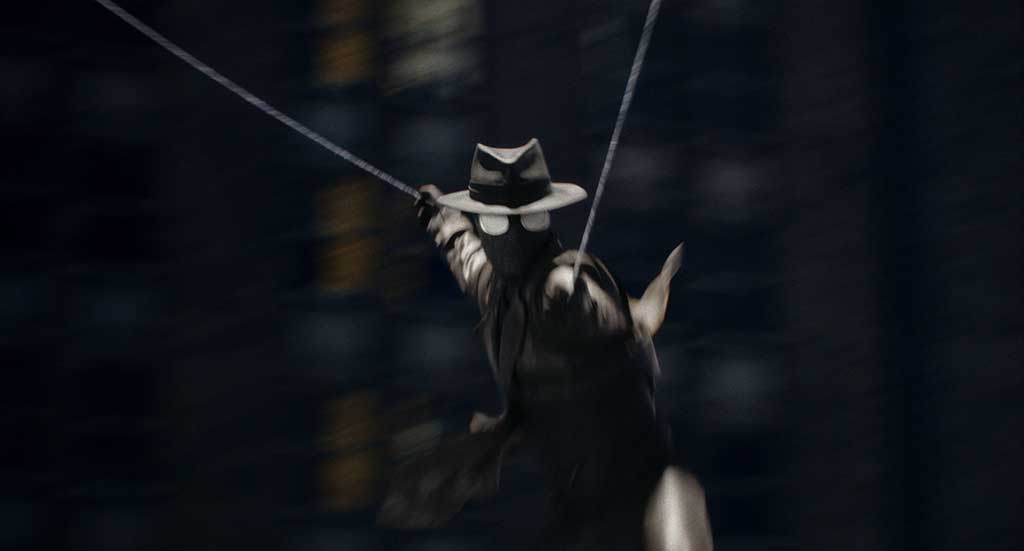
Ben Reilly’s webs became another expression of the character’s age and experience. Maximore says, “[That was] one of our first conversations with Michael Lasker, Visual Effects Supervisor on the Spider-Verse movies. Every Spider character has their own unique web, and a lightbulb went off in my head: ‘We need to make a web that is unique to Ben.’ Right off the bat, Oren was like, ‘I want a black web.’ Special effects built a few different iterations of a physical web so our actors would have something to interact with, hold and see in their hands. We took what they started with as a jumping-off point and pushed it. What if we tried adding a bit more salt and pepper, not just as a reflection element, but to have gray strands interwoven into the web? What if his web wasn’t as clean and pristine? All of these ‘what ifs’ led us down this road, and we went through so many concepts. When we finally built the 3D web and got the first round of renders from ILM, it was constant feedback until we landed on this look.”
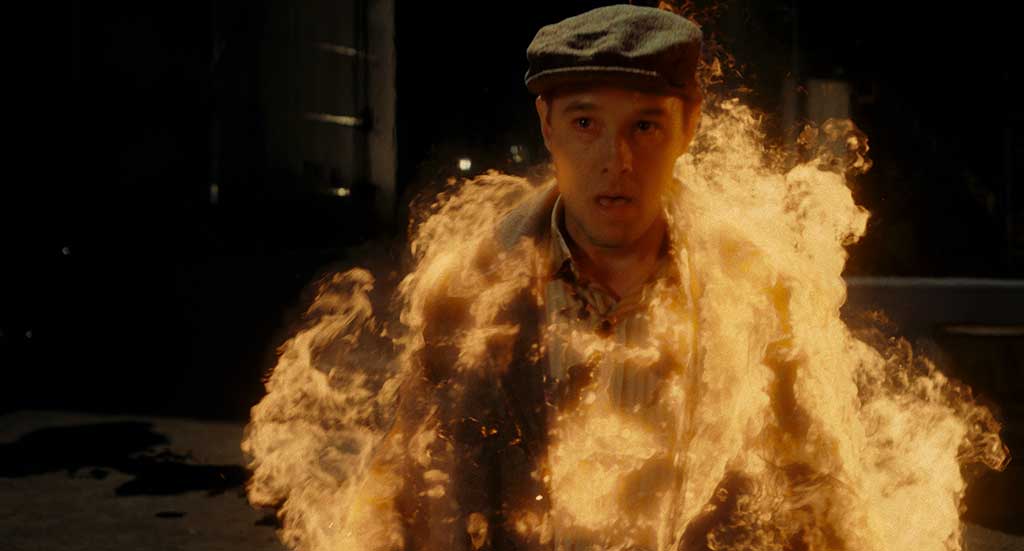
Nature, rather than comic book lore, served as the cornerstone for superpowers demonstrated by the members of the rogue gallery. “Tombstone [Abraham Popoola] in the comic books is an albino and is stone,” Maximore notes. “In our version for the show, his skin still hardens when he is in battle mode, but it’s based on a hardened shell, like a scorpion or tortoise. Similarly, when Dirk Leyden [Andrew Lewis Caldwell] is electrified, the patterns of his electricity resemble those of a lightning-strike victim. If you Google ‘victims of lightning strike,’ they have a distinct scarring pattern, which informed our concepts and work with the prosthetic designer. The same thing for Sandman [Jack Huston]. We took a lot of inspiration from the grittiness of infected, diseased skin, so it still looks like sand, but that transformation from skin to sand is not pleasurable. It’s meant to appear painful. If you look at it in the color version, you see reddening, irritated skin before it turns to sand. Oren had a ton of input on how he wanted that transformation to happen. The timing and everything needed to feel like these guys are not having a great time with these powers.”
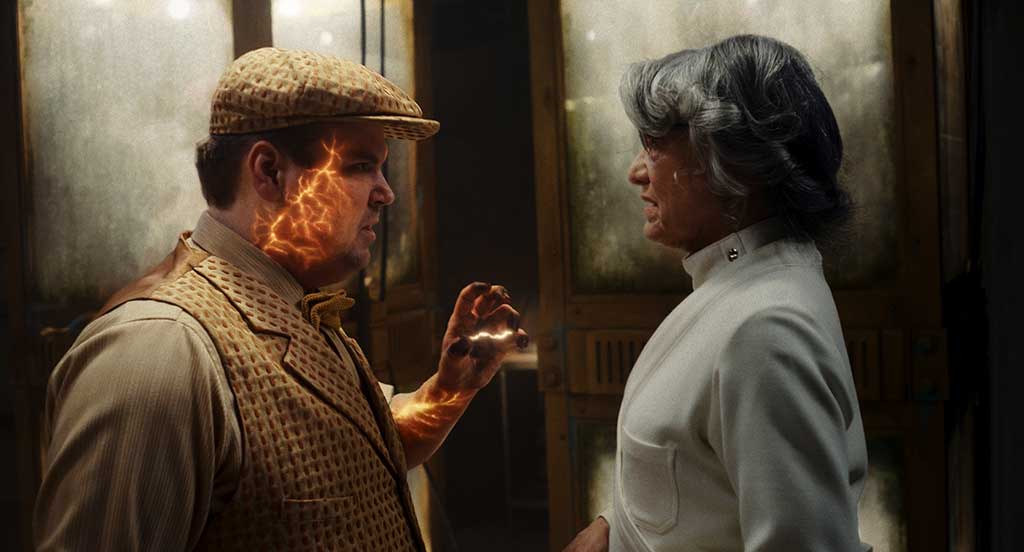
Extensive testing was conducted. “What looks good in color might not show up in black and white, and that was true for all of our characters,” Noska says. “We worked hand in hand with the makeup effects to make sure everything was going to be presented as best as possible and that we were set up for success in post. With walk and talk, we relied heavily on makeup effects to help carry us through so we could use our resources and budget for other things, like making New York [feel like] New York. But when there are hero moments where we needed to help transition from human to aggravated into a fight sequence, we took it on. We got a lot of inspiration and physical assets from the production and makeup effects that we integrated into the visual effects so that everything was copacetic and seamless.”
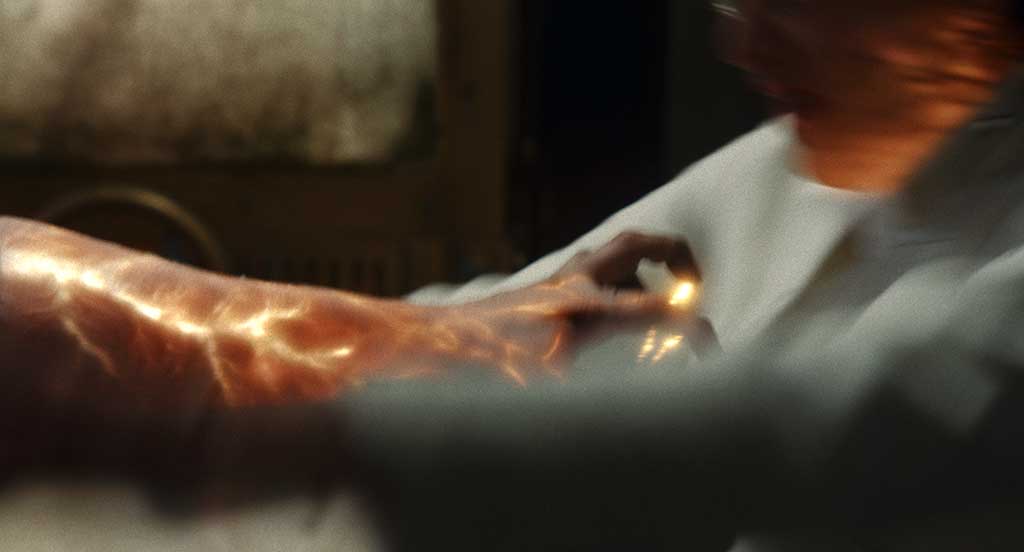
Tonally, the black-and-white and color versions differ, but they were not treated as separate entities. “We made one show,” Maximore says. “Sony and Amazon came to us and said, ‘This is the task. We want to present the show in both color and black and white.’ Our DP [Darran Tiernan] suggested we shoot a test and run it through the whole pipeline before production even started. The Production Designer [Warren Alan Young] is building stages, and we’re going around the Sony backlot shooting this elevated student film of these little Spider-Noir scenes that we ran through a pipeline and made some decisions based on that.” To keep every department working toward the same visual goal, Tiernan gave the department heads Sony A7 cameras loaded with two different LUTs, allowing material selections, reference photography and makeup swatches to be evaluated against both final looks.
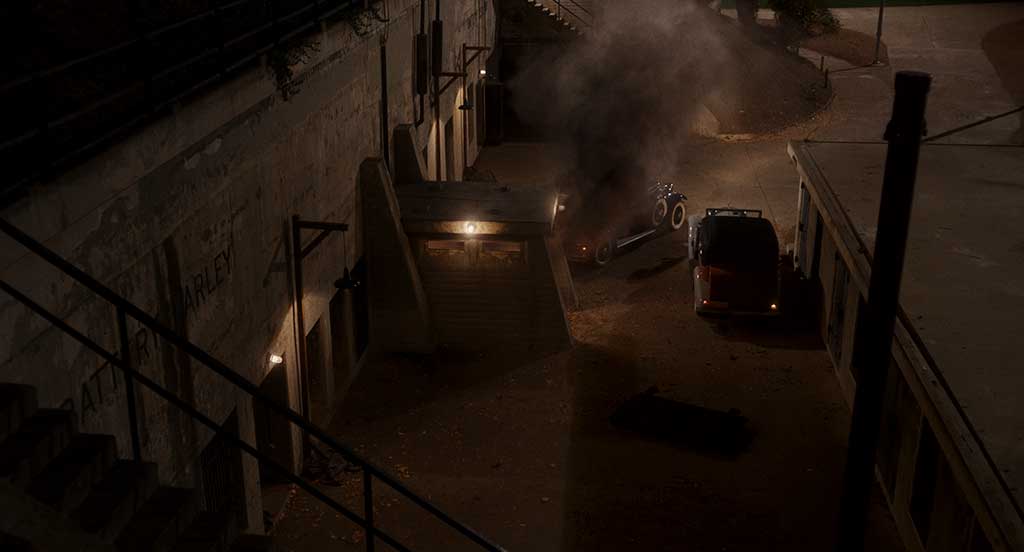
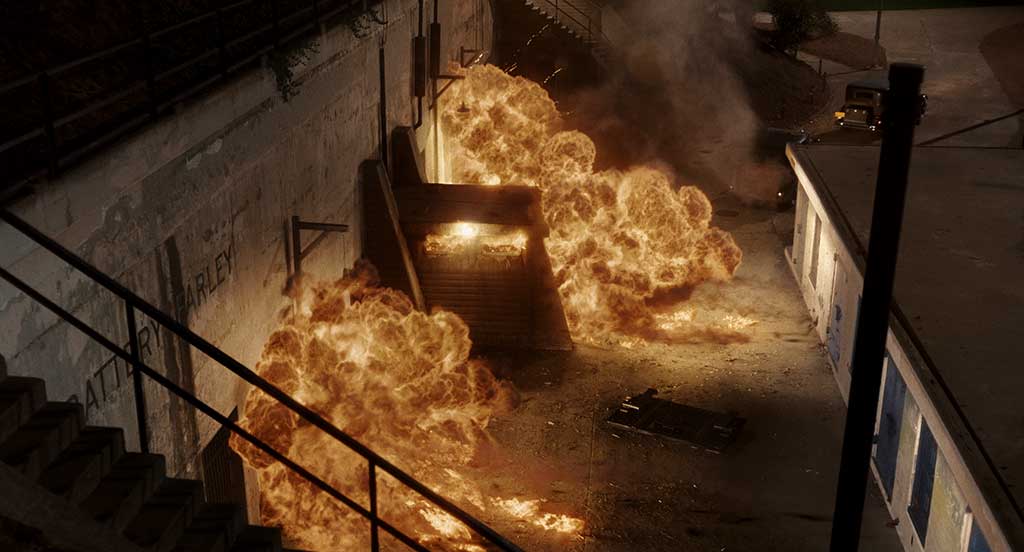
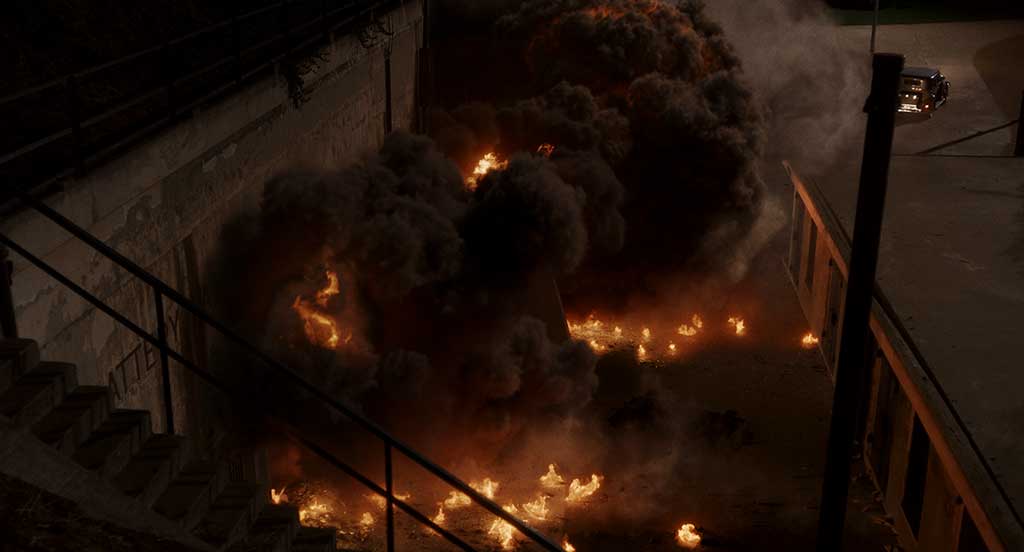
Ninety percent of the sinking car flashback was captured in-camera. “Sony has a pool, which a lot of us did not know existed,” Maximore reveals. “They took it out, filled it up, and we got a period car and sunk it for real. That is a stunt performer in the suit, backlit swimming. The cameras were at the bottom of the pool, which was about 12 feet deep. It looks awesome.”
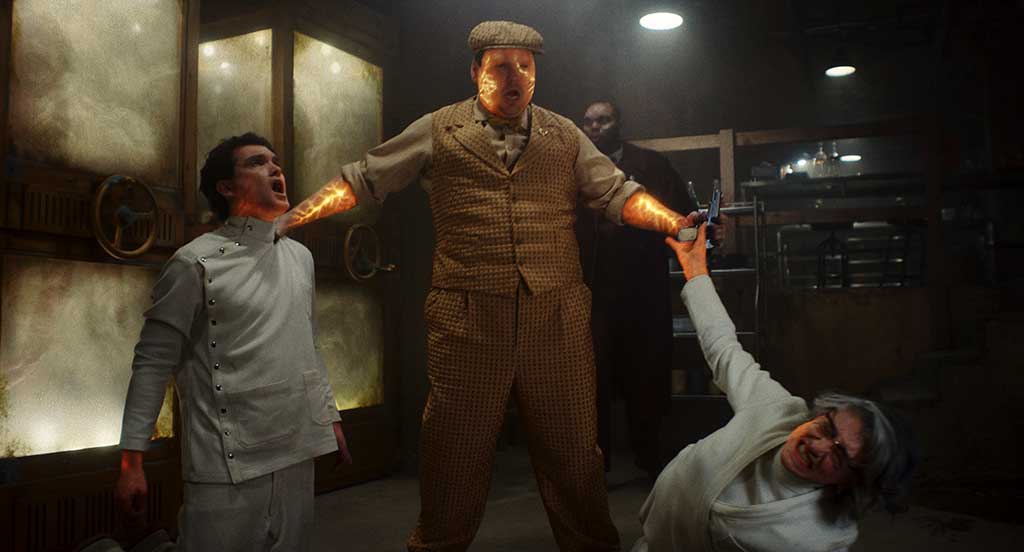
Noska says, “The stunt team, led by Freddy Bouciegues, was a great collaborator, especially during the bar brawl. Freddy and his team were not only down to do anything, but also well-versed in visual effects. In that sequence, you want to be circling the fight as a POV. It brings the audience in. Ben is at his wits’ end and a little sloshed. It’s great dramatically but a comedic relief moment at the same time that sells the heart and soul of the show. It was a hero moment to show how cool the webs were because we got up close and personal with them.”
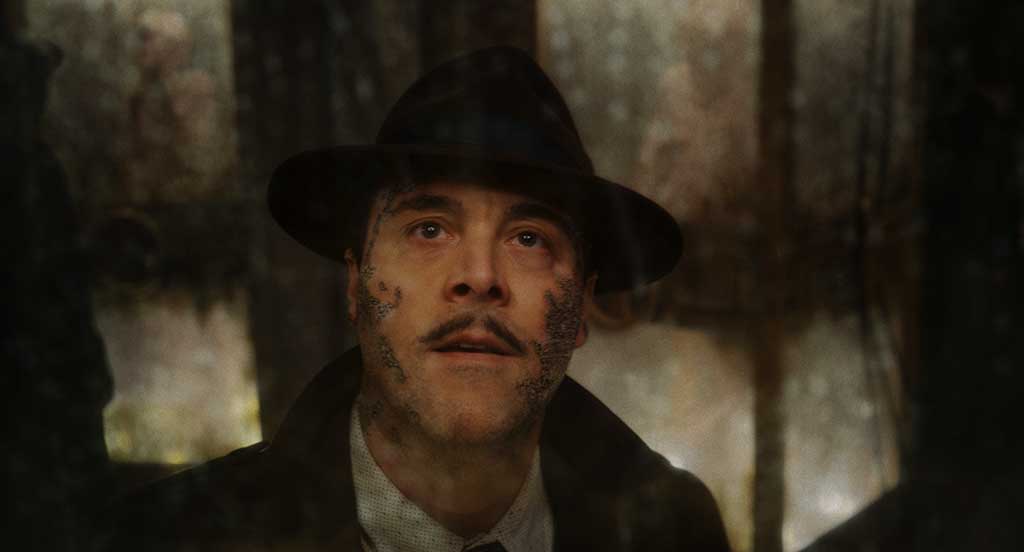
“What looks good in color might not show up in black and white, and that was true for all our characters. We worked hand in hand with the makeup effects team to ensure everything would be presented as well as possible and that we were set up for success in post. With walk and talk, we relied heavily on makeup effects to help carry us through so we could use our resources and budget for other things, like making New York [feel like] New York…”
—Brooke Noska, Visual Effects Producer, Spider-Noir
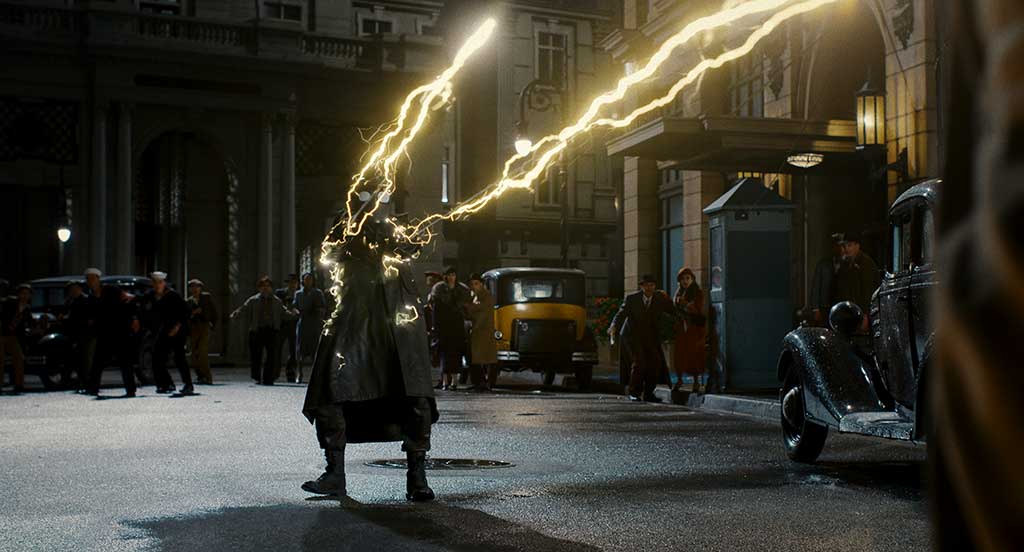
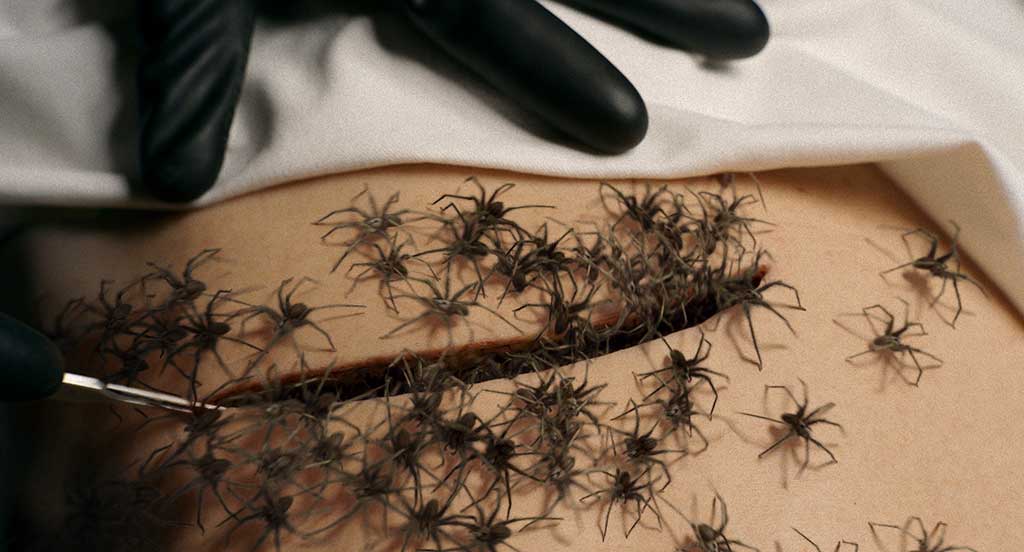
The team paid special attention to the on-screen arachnids. “The spiders needed to be grounded in reality and look real, but the notes we gave were always that he needs to be relatable,” Maximore remarks. “For visual reasons, they are slightly larger than reality. We also had an animal wrangler on set who brought a variety of spiders for us to photograph and scan. We had great video references of these spiders moving around. With the help of animation, they infused a bit of personality into them but without being distracting.” In the end, the spiders had to be CG. “Because of the dual delivery, we found throughout the editorial process that we couldn’t see the real spiders in black and white,” Noska says. “If you are going to have a spider, we’ve got to be able to see it. It was a discovery there as well.” There is also the nature of the real creature. “Spiders are going to do what they’re going to do,” Maximore laughs. “They refuse to take notes!”
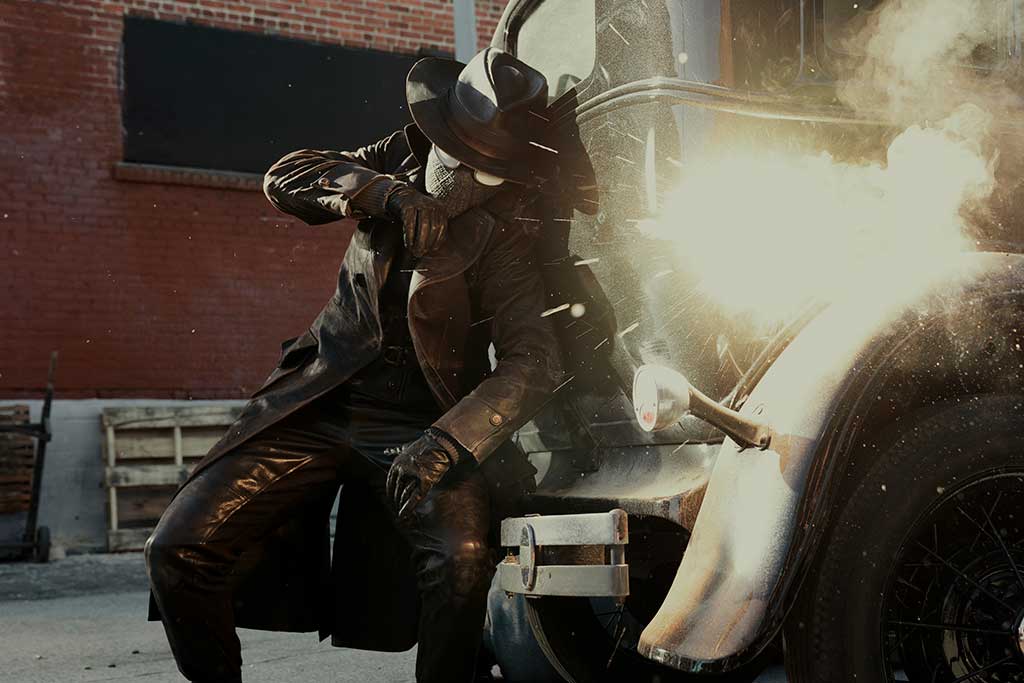
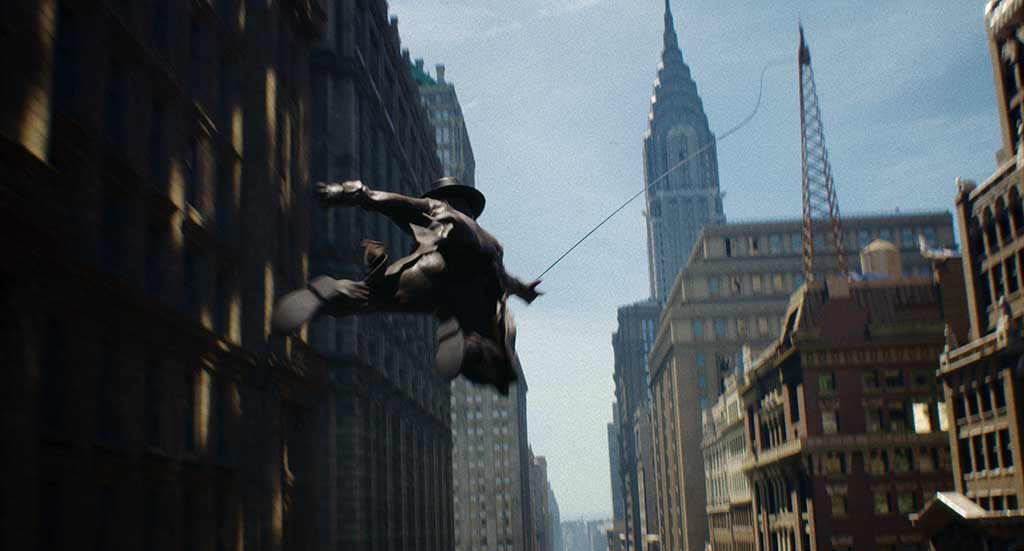
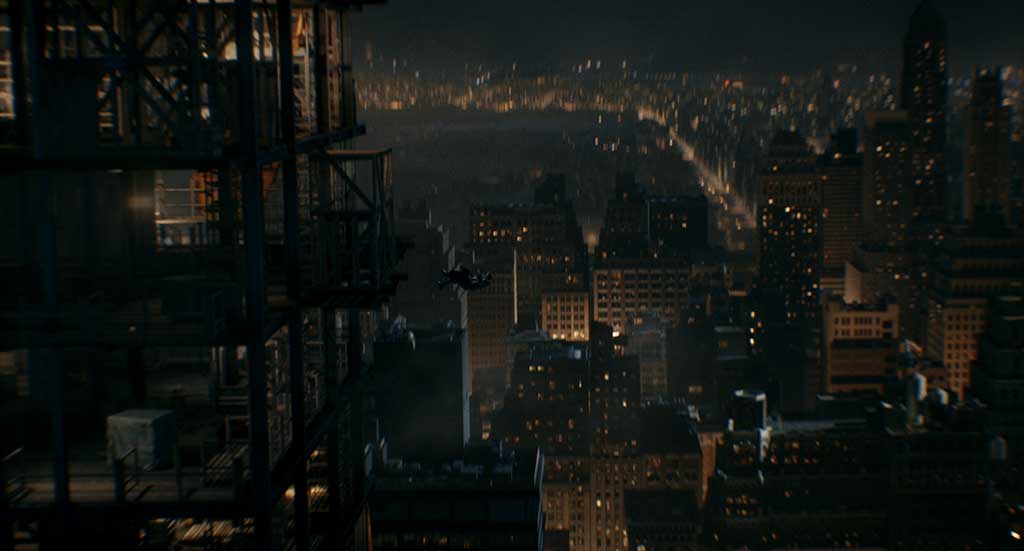
OldNYC.org was a great reference for the world-building. “It’s a fun website where you go in and adjust the time slider to a date, and it shows you a map of Manhattan, and you can pick different locations,” Maximore observes. “It’s a huge catalog of period photos. There is a great PBS documentary called Men at Lunch that shows the Rockefeller Center under construction, so you had all these amazing panoramas as references. We had to do full visual effects for a lot of our wide city shots for them to work because there was no plate photography.” The show opens with 10 to 12 visual effects shots of Spider-Noir swinging through New York City. “For us, we were setting the tone of the show. By the time we got around to doing that, we had dialed in our swinging and look of how Noir moves in the world. It was about finding that sweet spot between telling the story with the voiceover and making it work with the tone of our story.”

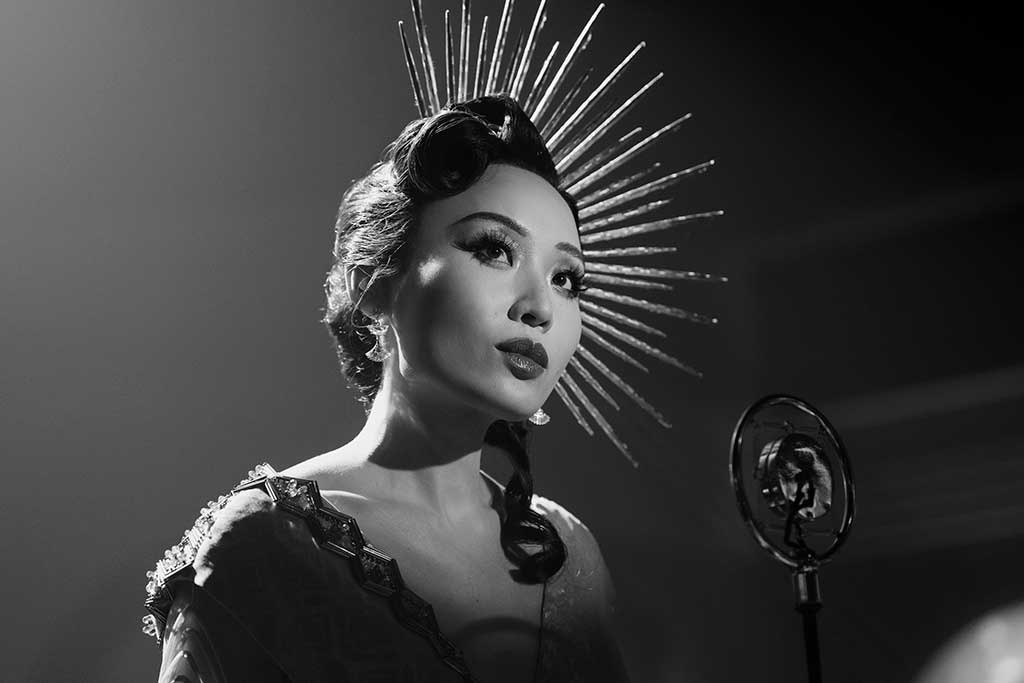
The dream sequence in Episode 106 was a great challenge. “Oren wrote one thing, and when it was shot and edited, he said, ‘This isn’t hitting the tone I wanted,’” Maximore reveals. “He kept going back to the Salvador Dali sequence from Spellbound.”
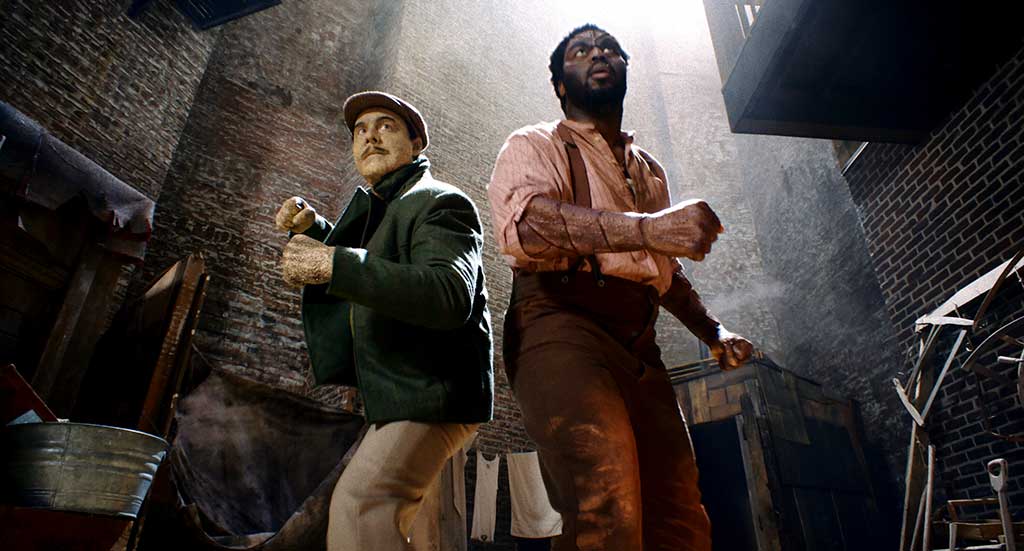
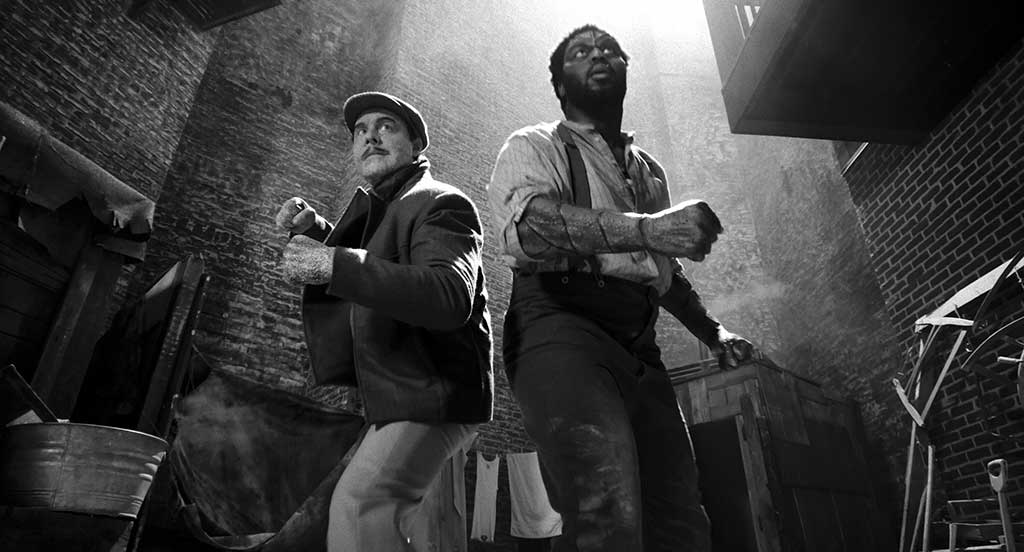
Maximore pitched several alternate ideas. “We retained as much of Nic’s performance as possible. We had to introduce a couple of full visual effects shots, each with its own set of complications. For a number of reasons, we could not scan Nic, so making a full digital double in those sequences was a logistical challenge. We overcame it in the style and tone of the end result. How we introduce these apparitions and how Ben has to confront his past decisions was hard to do but rewarding.”
Out of great challenges came great ideas. “We had the plates of Nic and all of these props and had access to the art department library,” Noska recalls. “We asked ourselves, ‘What can we do with all these items? Because reshoots are not an option.’ We can’t do a different story, so what story can we tell within what we have? It was an opportunity for us to be part of selling a sequence wholly owned by visual effects and be able to help tell a pivotal moment in Ben’s storyline.”