Images courtesy of Netflix.

Images courtesy of Netflix.
Nostalgia reigns supreme, particularly in a contemporary streaming series seeking to capture the horrific, comedic and adventurous tones of 1980s Amblin Entertainment. No exception is the Netflix series The Boroughs, created by Jeffrey Addiss and Will Matthews, produced by The Duffer Brothers (Stranger Things) and starring Alfred Molina (Spider-Man: No Way Home), Alfre Woodard, Denis O’Hare (True Blood), Clarke Peters (Foundation), Jena Malone (Rebel Moon) and Geena Davis (Thelma & Louise). The eight-episode season is set in a luxury retirement community in New Mexico, where a group of residents uncovers an otherworldly threat and attempts to thwart it.
“The vibe started in the script, in terms of the characters, how they care about each other, and the Goonies-like way that they go on adventures as seniors,” Tara DeMarco, Visual Effects Supervisor, states. “There was a lot of collaboration with [Director of Photography] Matthew Jensen, who wanted to use slightly softer lenses and specific lens treatments. We did tests early on, and he made sure that, even though those lenses were soft, they worked for us in visual effects. Matt also wanted to keep a fair amount of The Boroughs in-camera, as did the showrunners. We did a lot of prep at the start in Unreal Engine, in an asset that Pixomondo built, trying to figure out what we would see, what we wouldn’t see, where we’d owe an extension, and where we could build some extra set, so that we could all stay in-camera; that allows for more magic and spookiness later because you’re not trying to fix every frame. The visual effects were more intentional.”
Showrunners Jeffrey Addiss and Will Matthews – frequent collaborators whose writing credits include The Lord of the Rings: The War of the Rohirrim – have a great interest in visual effects. “Will and Jeffrey are in love with creature work and magic, and they want the audience to be transported,” DeMarco remarks. “Our directors were incredible. Ben Taylor had a large hand in setting visual effects keyframes and viz for all his creature sequences, which involved figuring out how the creature would move later. We wanted it to be magical when it was supposed to be, and everybody was on board.”
DeMarco emphasizes the importance of making the town feel real. “Will and Jeffrey wanted the town to feel integral to the story, and that had to be a real place that the seniors wanted to fight for.” That sense of place was shaped by the architecture with a 1950s sensibility. “Those are Palm Springs houses. That mid-century modern design of the house absolutely exists in California. There was a Southwest element brought in, in terms of the adobe structures and the town square, and then all the greenery. We had a whole plant bible of what plants would be found in New Mexico and the Southwest. That’s the stylistic mashup.”
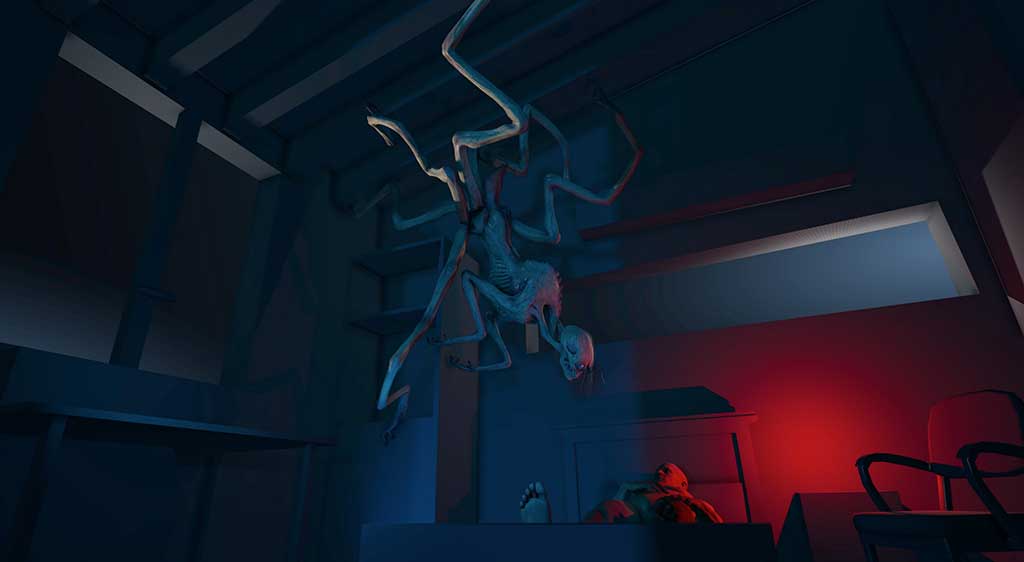
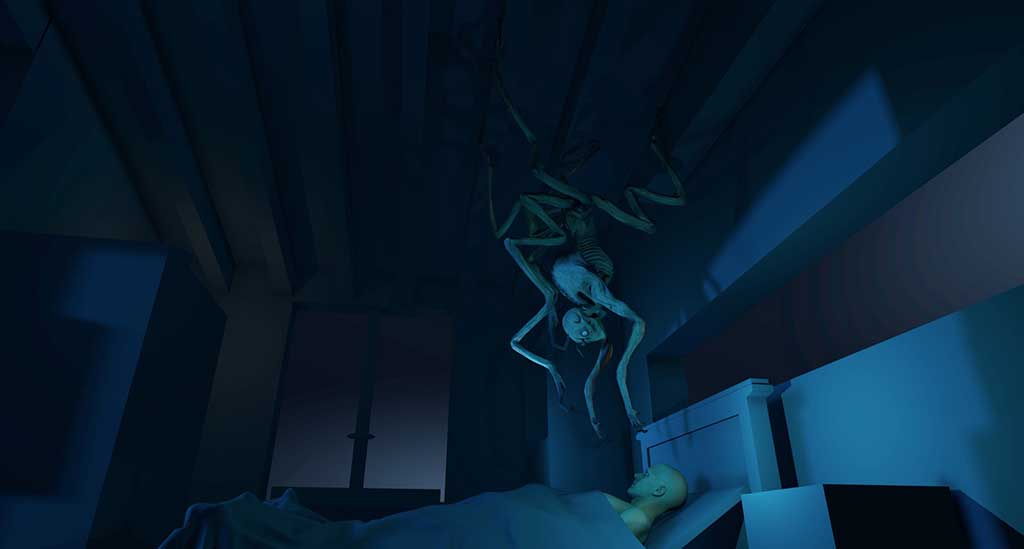
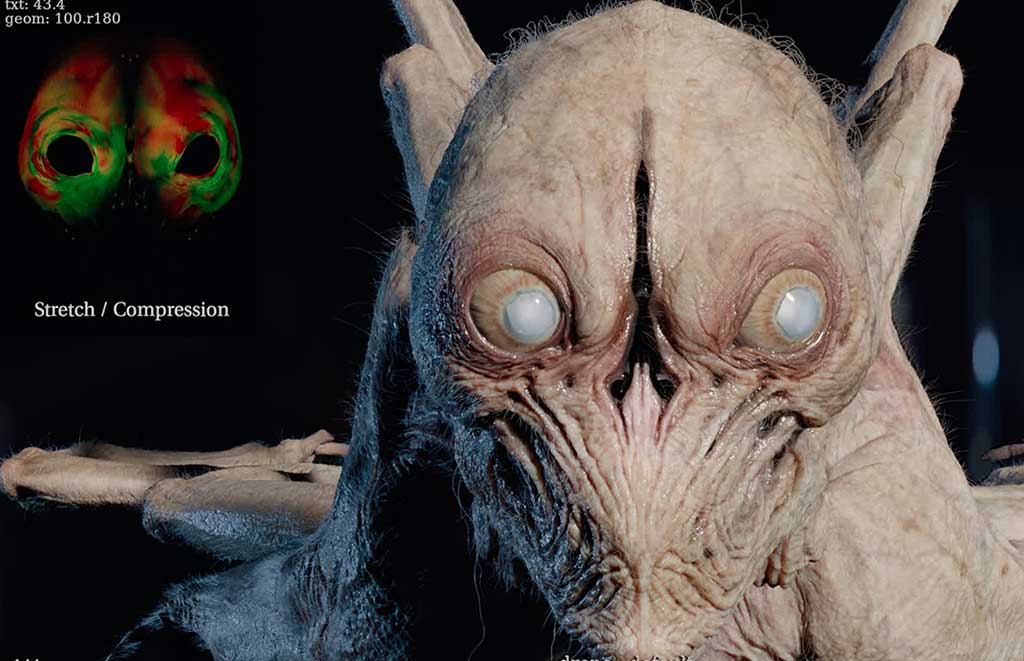
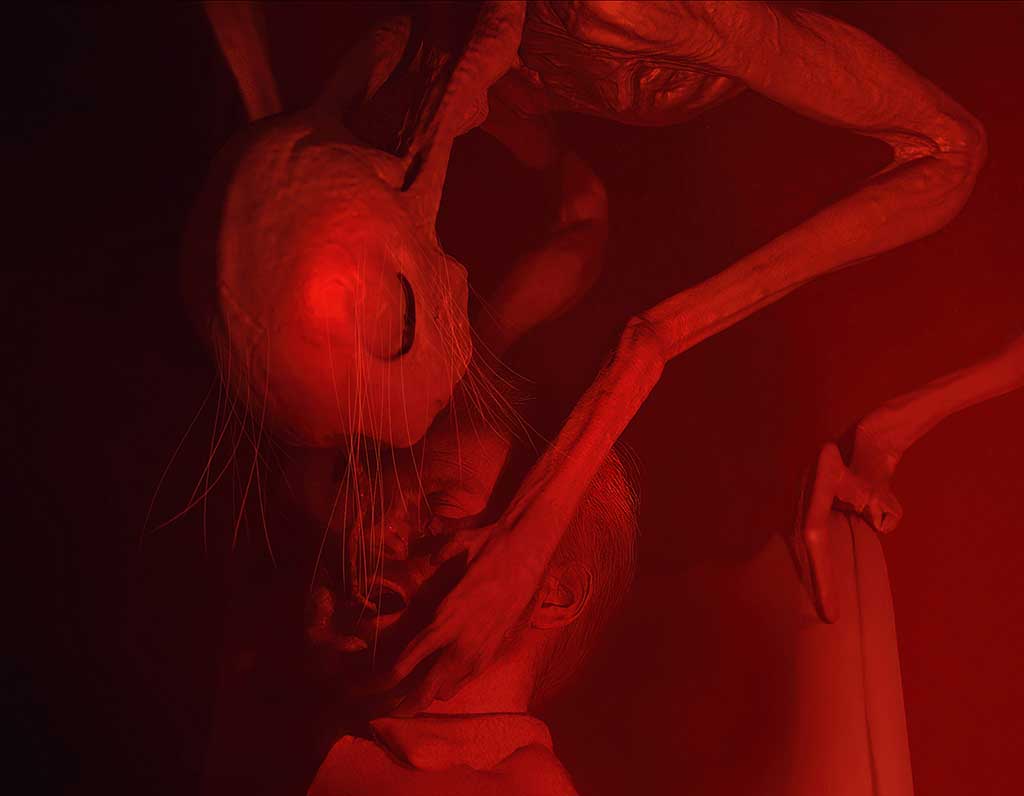
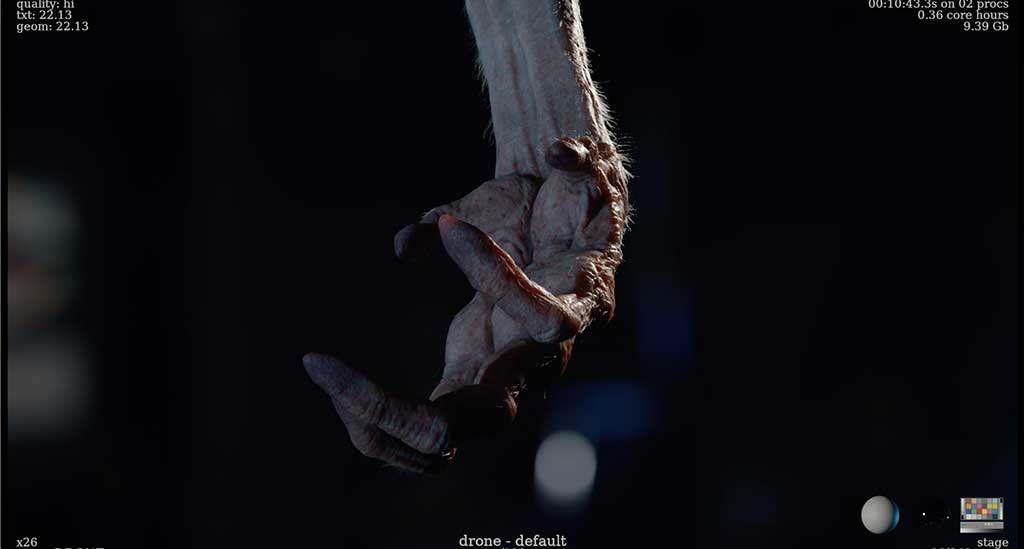
Another major design focus was the creature. “It had to feel old, with thin skin, hair and liver spots, and have trouble moving,” DeMarco reveals. “There were a lot of conversations about animation and how the skin should wobble and react. We studied an old ballerina in her 70s who could still do pointe to figure out how the musculature would be defined [while retaining] some skin laxity. They wanted the creature to be this ancient being that the audience would find sympathy for because it has this arc from being scary to childlike. We had a concept artist, Jerad Marantz [Doctor Strange in the Multiverse of Madness], working on just the creature. Then that creature work went to Jamie O’Hara, a visual effects concept artist, who helped us do keyframes so we knew what to aim for. We would scan the sets in Polycam and then pass them over to ILM to previs the creature in the scenes for us so we would know what to shoot on the day. Once we had plates of those scenes, they would go right back to ILM for postvis, and that postvis essentially became our blocking animation. It was a nice workflow.”
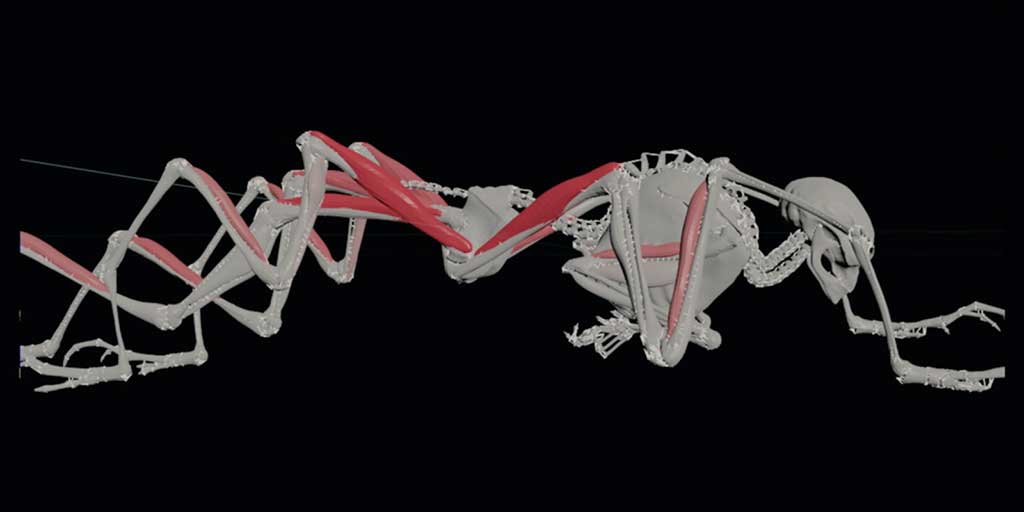
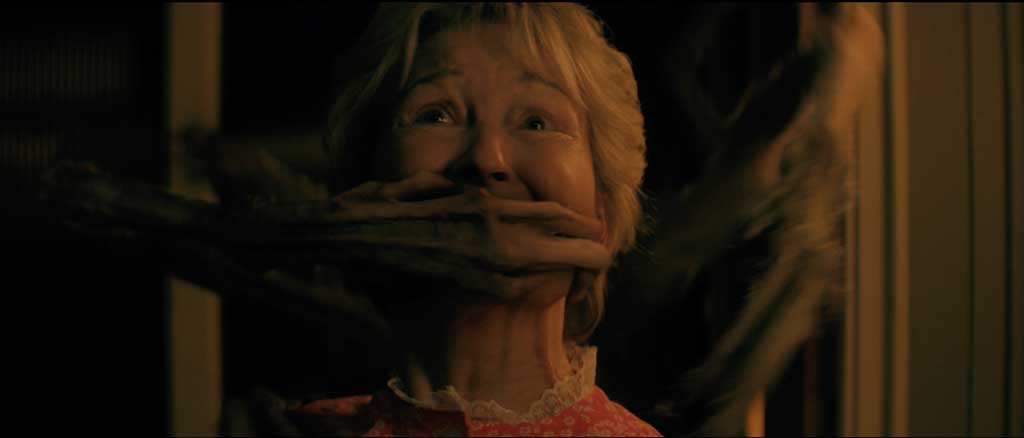
The creature’s eight limbs complicated matters. “Six of those limbs have five limb segments, so we spent a bunch of time figuring out how it would move,” DeMarco states. “Tied to that technical challenge was which muscles in which limb should flex and release so that you can have that older skin laxity and movement. It was a special team effort with ILM London, which developed this style we called ‘geriatric parkour.’ The creature was designed to come out of the oven, along the ceiling and lower onto the seniors.” To facilitate the creature’s interactions with the cast and provide lighting references, Onyx Forge Studio created a series of props. “We had a set of tiny hands that props could clamp over Grace’s mouth and touch Gina’s face. There was a stand-in proboscis which we did not put inside anyone’s mouth, but we would walk it into camera. We had a bust for lighting reference early on and used it for everything in Episodes 101–104. Then we made a full-size creature for the finale that we could bring in for a lighting reference. The beautiful creature scene in Episode 105, where it’s on the train tracks, was a full creature lit by Matt Jensen, and then we were able to replace a bunch of it in CG.”
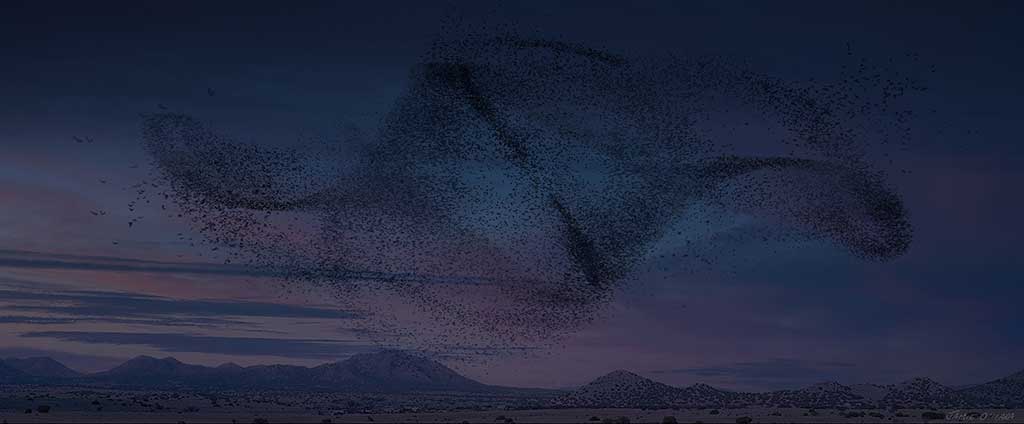
Just under 1,200 visual effects shots were produced by ILM, Framestore, Ghost VFX, Crafty Apes and Platige for the eight episodes. “We had two trained crows on set; one was called Shadow,” DeMarco recalls. “We filmed all the beats with Shadow, apart from the beat where he dies. Ultimately, there were a few additional shots where Shadow maybe didn’t come with the right performance, so we replaced Shadow and a couple of shots inside Art’s hideaway. The crow murmuration was probably the most complicated series of shots to finish because it’s an odd thing. Crows don’t do murmurations, so to have such a large bird in such a complicated pattern was a new visual challenge, and we didn’t have a reference for it. Additionally, the crows had to both die en masse and tell a story.”
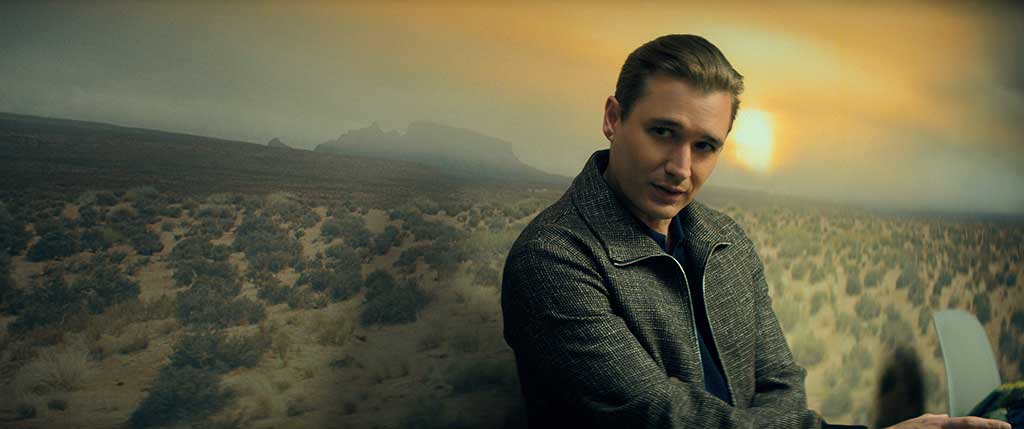
Glitching was another important visual element, particularly during Sam’s hallucinations of Mother talking to him. “It’s meant to be a communication from Mother. We knew the goo could be activated by the old TV, and we were going to play with the language of old TVs, messing with the monsters. We added a few glitches to the moments that are supposed to be like a transmission using Sam’s language. Sam loves old TVs. We added grain and all kinds of great stuff to the assets that needed it.”
“[Director of Photography] Matthew Jensen also wanted to keep a fair amount of The Boroughs in-camera, as did the showrunners. We did a lot of prep at the start in Unreal Engine, in an asset that Pixomondo, built trying to figure out what we would see, what we wouldn’t see, where we’d owe an extension, and where we could build some extra set so we could all stay in-camera; that allows for more magic and spookiness later because you’re not trying to fix every frame. The visual effects were more intentional.”
—Tara DeMarco, Visual Effects Supervisor, The Boroughs
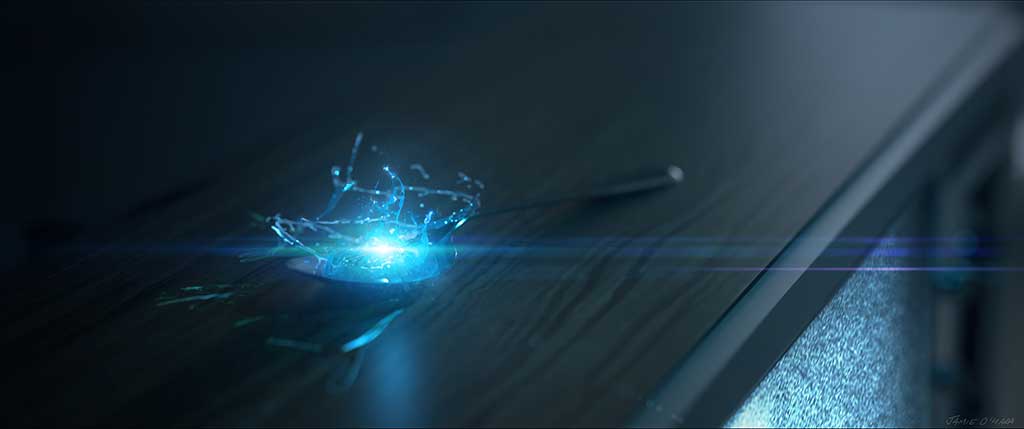
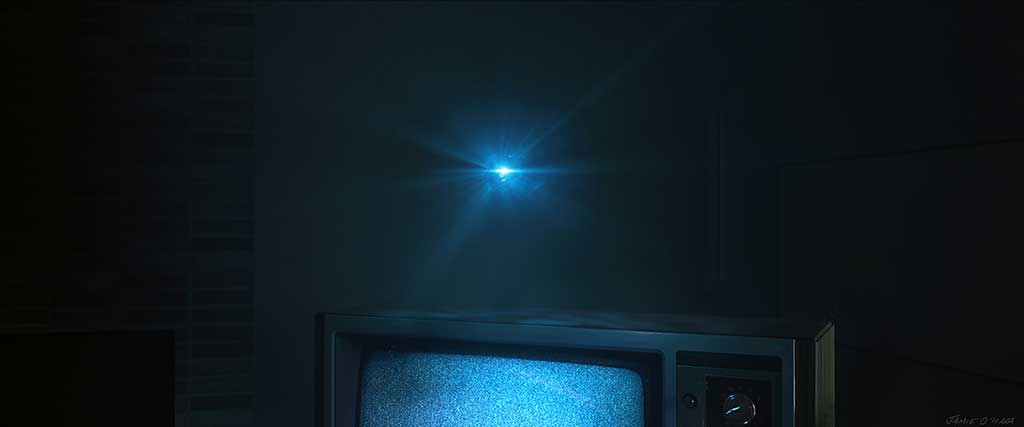
Televisions are a key visual and narrative element. “Some of our TV sets were real and could play footage,” DeMarco shares. “Some of our TV sets had milk or dark glass so they could have an off-state with some reflections, or the milk glass would allow for them to become lighting sources themselves. For the explosion at the end of Episode 102, we brought in extra white lights so we could time it to the performance, rehearse it, know how long it would die off for, to have control of that on the day. Then our visual effects matched in.”
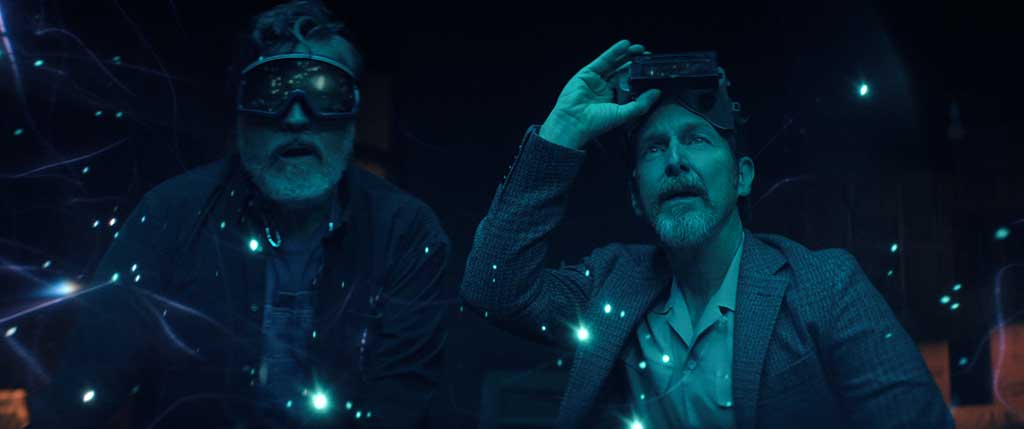
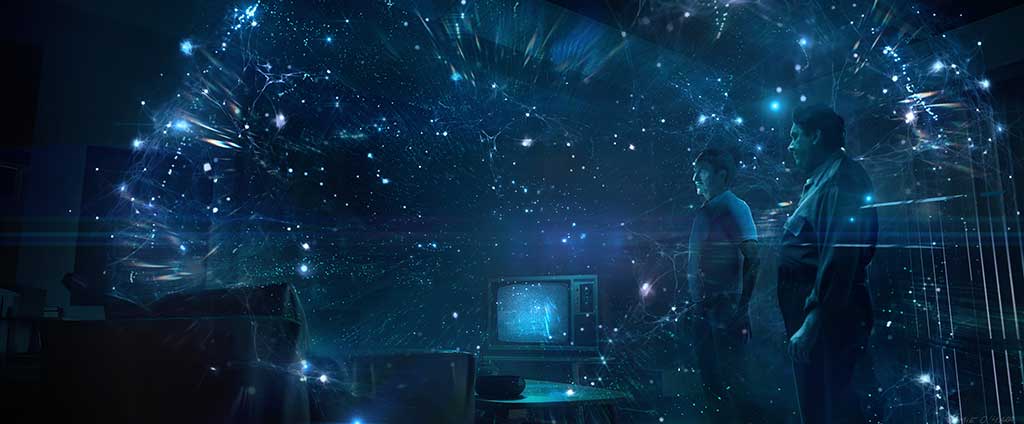
The explosion resembles a star map. “We had everyone agree on the visual effects keyframe early so we could then lock in the lighting. We wanted it to be blue and have the stuff of the universe, that atmospheric swirl of magic,” DeMarco says. “The lighting department made us a funky, multicolored, glowing hammer for when it’s in a concentrated form and starts glowing. Then we had some overall blue lighting with a hint of flicker. In visual effects, we added a little bit of caustic to that and broke it up a little bit more. It was a handshake between in-camera lighting and visual effects enhancement.” Art direction was needed to ensure the cast’s faces were not obstructed. “We definitely art-directed parts of the shot. We brought the couch down. We cleared a few particles off their faces. We allowed for the interaction with the actors to shine and vignetted the ones on the outside.”
Lights were placed inside the television sets. “They essentially could have variable flicker; that was pre-programmed and had multiple stages,” DeMarco says. “Will and Jeff wanted it to get more powerful at particular story beats because then it could trigger other changes in the monsters. All the static is visual effects compositing, and some of the glow is visual effects enhancing what was there, but we did shoot with lights on in the TVs and with some in-camera flicker.”
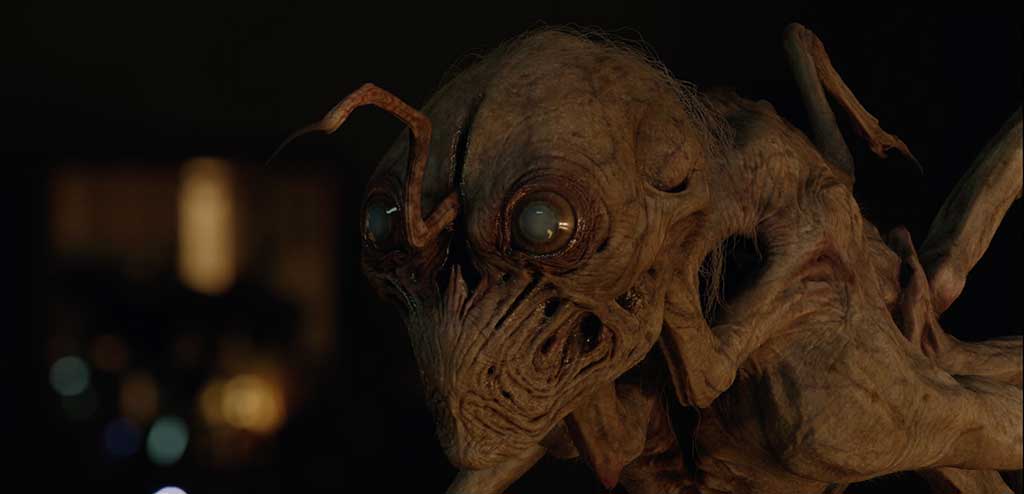
The television lighting spectacle reveals the monster underneath as the human skin melts away. “We call them going ‘monster-y,’” DeMarco explains. “It hasn’t been determined whether they’re aliens. Their monster faces are prosthetic builds. We then did visual effects work on top of the prosthetic build. Prosthetics are additive, and Will and Jeff really wanted the wounds to look like they hurt. We would do a little bit of shot sculpting to make sure that the wounds felt wet, as if they were fresh cuts, and looked painful. We filmed the actors in both the clean and monster states. ILM London spearheaded how to get from one to the other. Steve Ellis [Visual Effects Supervisor, ILM] wanted the skin to peel away, so if you look closely, there are little flecks of skin in the other particulate that go away. It’s gross!”
Academy Award-winning actress Geena Davis gets to relive an iconic Thelma & Louise moment when a car she is in drives off a cliff. “That sequence was so fun. Gina, as a human and an actor, wants Renee to kick ass and take names, so she was all-in on doing as much of that scene herself as she could,” DeMarco reveals. “All the shots are her except for one, so that was amazing. She did all the wrestling, the car and elbowing. We worked with the amazing Daniel Holt [Special Effects Coordinator], and he knew exactly how far that car would go. We had seven cameras placed around for the moment the car stunt happened. Most of the action was filmed with the static car before they jumped, which made it safer and simpler to shoot. Then, for the car flying off the cliff, we had a dummy in there. The dummy truly looked like a dummy. With Steve’s team at ILM, we reverse-tracked both the cameras and the car action and did a motion-control shoot with Eric Edelstein, the actor who plays Hank. We had him essentially hold the position he would have been in if he had actually been flung off the cliff. We were able to comp replace the dummy with an element of Eric, which is a super win for visual effects. We don’t often get to do that really planned, thoughtfully executed replacement. We normally have to make a digital double and replace whatever last-minute decision happens. The only digital face replacement that we put on any stunt performer in the show was for Renee as she jumps off the back of the car.”
“We had a concept artist, Jerad Marantz, working on just the creature. Then that creature work went to Jamie O’Hara, a visual effects concept artist, who helped us do keyframes so that we knew what to aim for. We would scan the sets in Polycam and then pass them over to ILM to previs the creature in the scenes for us, so we would know what to shoot on the day. Once we had plates of those scenes, they would go right back to ILM for postvis, and that postvis essentially became our blocking animation. It was a nice workflow.”
—Tara DeMarco, Visual Effects Supervisor, The Boroughs
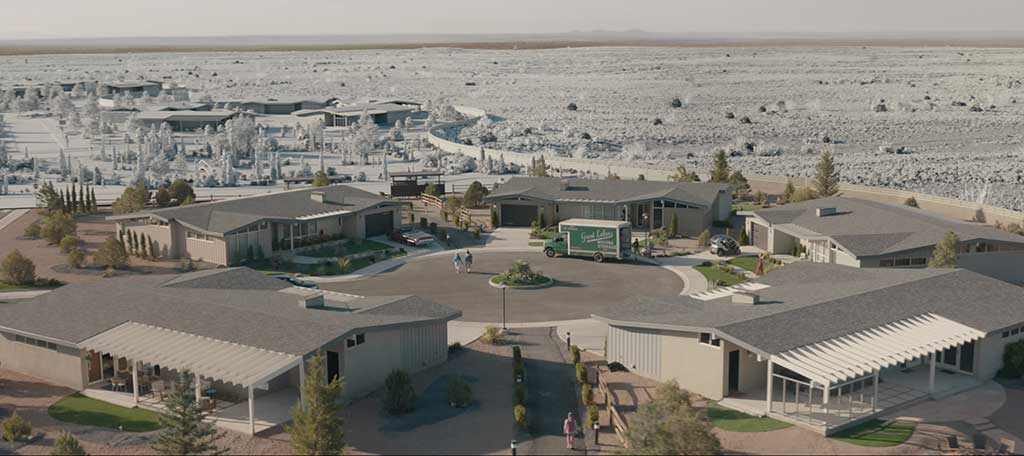
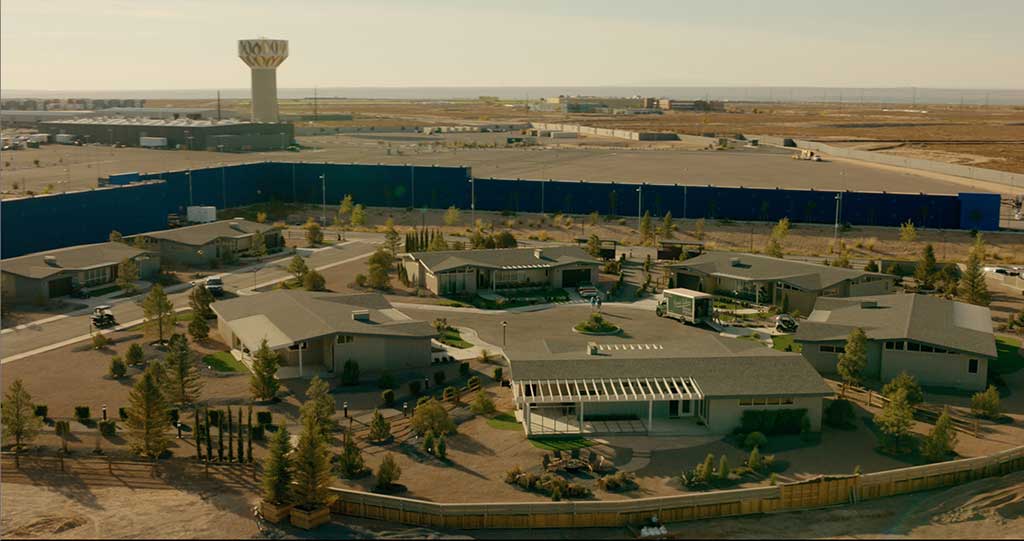
Scans were taken of the eight major sets. “The major world build was the view from the hero cul-de-sac,” DeMarco remarks. “Our filming cul-de-sac had five houses in a circle, and then three houses at the end of the row, surrounded by bluescreen containers on two sides and Netflix fencing on the other two sides. We spent a lot of time working on the view of the town from Sam’s house, be it from the sky or the ground. Sam’s house is two miles across from the town where we arrive. We also focused on the arrival shot, which is a full CG city set into a golf course plate where it was actually snowing the day we filmed. We made it warm and sunny, and then we added a whole town. In that town view, if you look closely, you can see the manor on the edge of town. You can see the headquarters around the corner from the manor. You can see a hint of the town square in the center. You can see the mortuary. We took all the locations from filming and placed them on the map where they would really be.”
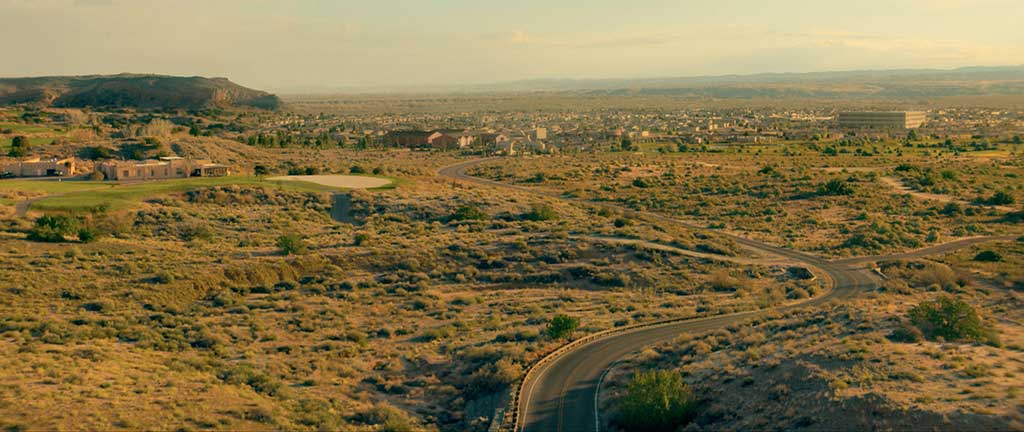
New Mexico has an ever-changing sky. “Some of the most beautiful environment extensions were on moodier days when we didn’t happen to get the sun. It is fortunately sunny there a lot of the time, and the clouds move constantly. We did a fair amount of making sure it felt sunny and warm, and that it was a place our seniors could live and be comfortable.”